Key points:
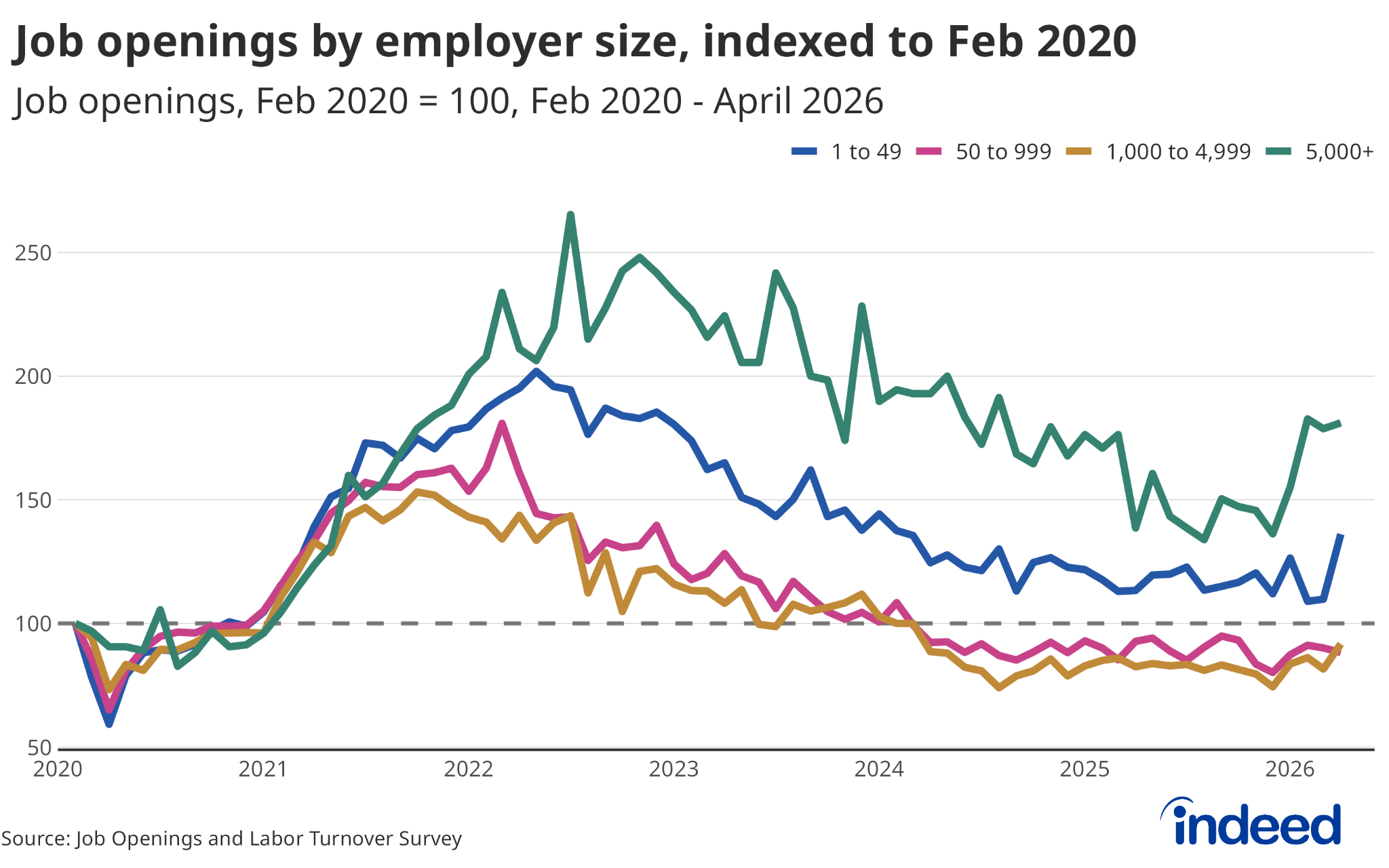
- Job openings were unchanged at 7.6 million in May, from a downwardly revised level in April, according to the US Bureau of Labor Statistics.
- The layoffs rate ticked up to 1.1% in May 2026 but remains well within its recent range.
- The quits rate was unchanged at 1.9%.
Today’s JOLTS data prove that the job market is definitely not broken, which is good news, but it’s also not really moving. There are a good number of job openings, but people aren’t going anywhere, and that represents a problem of its own. The quits data tell a more revealing story than the headline numbers suggest, and may help explain why many job seekers are not feeling as positive about the market as the otherwise decent headline numbers suggest.
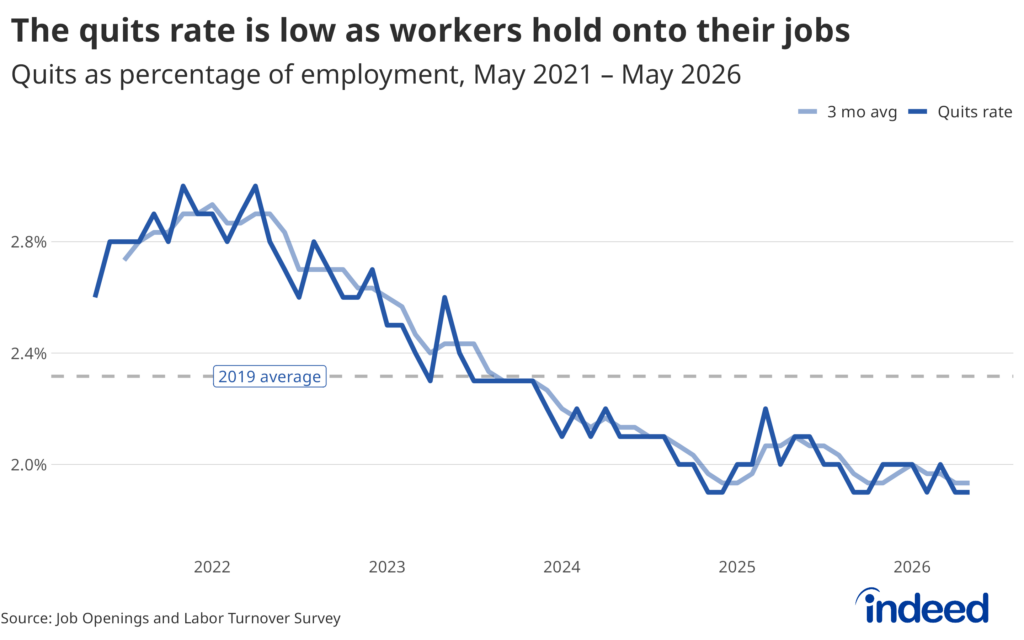
The quits rate is one of the most reliable signals of worker confidence in the labor market, and stood at just 1.9% in May. It has now been at or below 2% for almost a year straight, well below pre-pandemic norms and the 3% peak in the Great Resignation era of early 2022. Workers tend to quit jobs when they believe something better is within reach, and right now the data indicate that many clearly don’t.
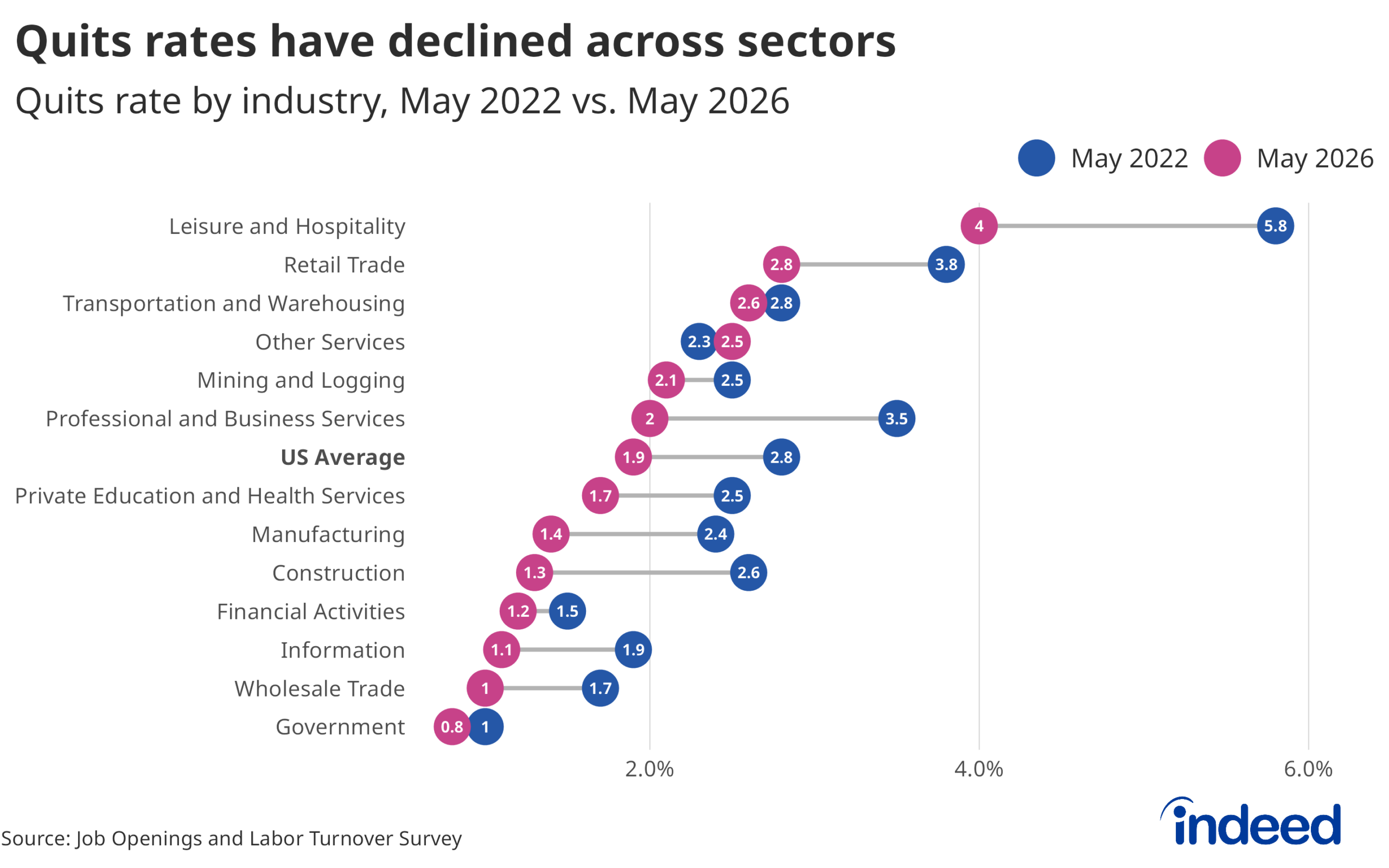
Since peaking in May 2022, the quits rate has fallen in almost every sector. The rate in the typically churn-heavy leisure and hospitality sector dropped from 5.8% to 4%, and the information sector, home to most tech jobs, dropped from 1.9% to 1.1%. The message is consistent: workers’ confidence in their ability to quit and find a better opportunity elsewhere has fallen dramatically over the past four years.
This low confidence extends beyond current employees; headline job opening numbers don’t automatically translate to real opportunities for job seekers. Total hires remained unchanged at 5.2 million, continuing a puzzling divergence as job openings and total nonfarm employment rise but actual hiring remains subdued. This is not a contradiction; it just means that recent employment gains are being driven more by a historic drop in separations than by new hiring activity. Fewer people are losing or leaving their jobs, but not many more people are getting them.