June 5, 2026
Key points:
- Employers added 172,000 jobs in May, according to the Bureau of Labor Statistics, and figures from March and April were revised up by a combined 93,000 jobs.
- The unemployment rate stayed steady at 4.3% in May.
- Both hires and layoff rates remain depressed, with the share of unemployed workers jobless for 27 weeks or more rising to 27.5%, up from 20.4% a year ago.
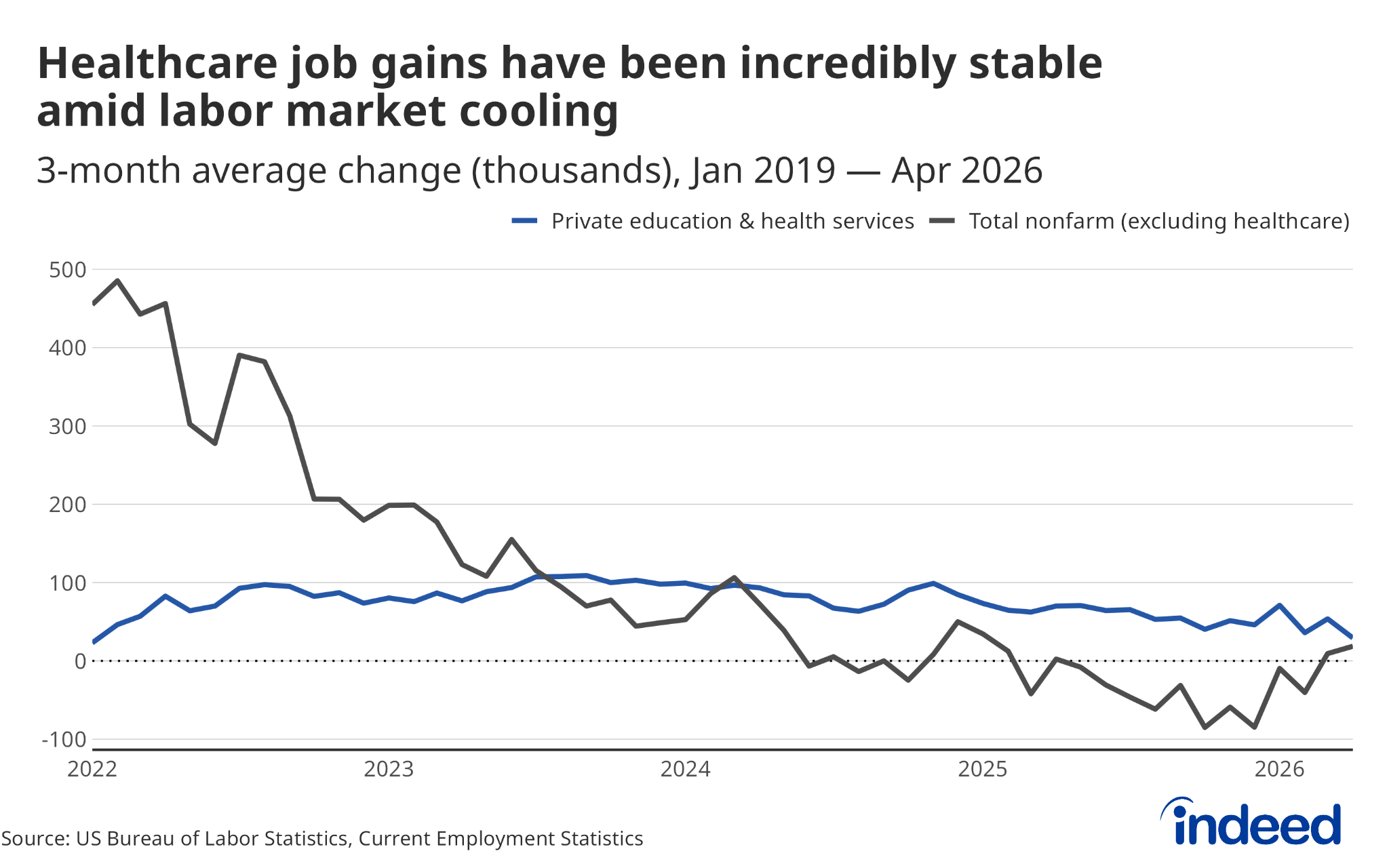
Employers added a surprising 172,000 jobs in May, more than double what was expected, and the unemployment rate held steady at 4.3%, according to the US Bureau of Labor Statistics. It’s the kind of headline result that looks like a serious plot twist after months of lackluster reports. The numbers may be even better than they look, given that many economists have determined the monthly breakeven rate — the number of jobs that need to be added to keep unemployment steady — has fallen to a much lower level. But the headline continues to obscure the same underlying story we’ve been telling for months: This is still a low-hire, low-fire market, and the calm on the surface reflects stillness underneath, rather than genuine momentum.
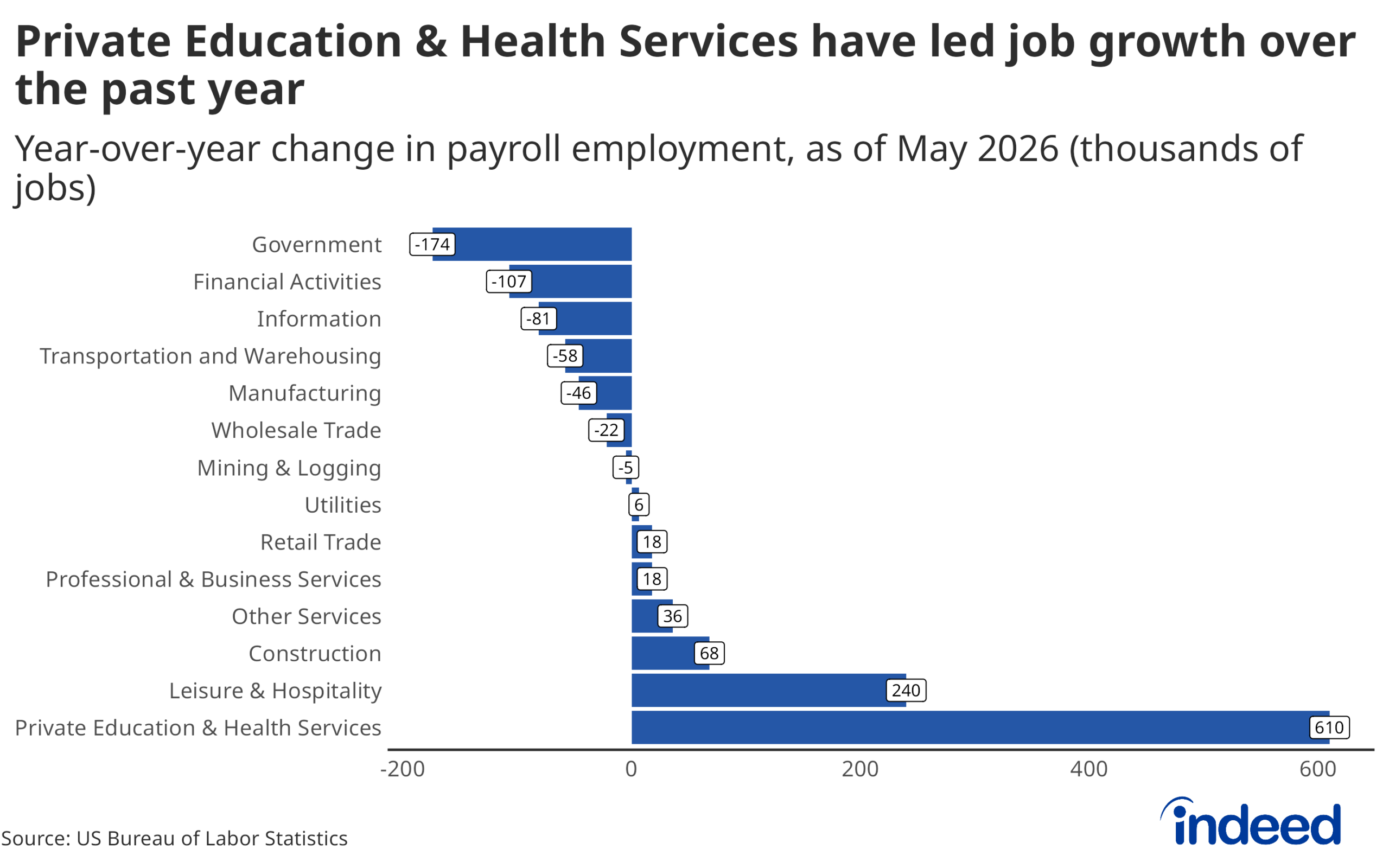
Job growth was more broad-based in May than we have seen in recent months, with leisure and hospitality, government, and private education & health services each adding at least 40,000 jobs in May. Financial activities, on the other hand, lost 22,000 jobs, and is down 107,000 jobs compared to this time last year. Exactly half of the sectors have lost jobs over the last year, while the other half have seen gains.
This is where the story begins to diverge. Layoffs remain low and the unemployment rate is holding, which is unambiguously good news for the workers who have jobs. But the encouraging employment numbers are only half the story. The hires and quits rates both remain seriously depressed, and workers who might otherwise jump ship to something better are staying put because the off-ramps have dried up. For those out of work, low layoffs offer little comfort when low hiring means a longer, harder search.
Nowhere is this more visible than in the long-term unemployment numbers. The share of unemployed workers who have been out of work for 27 weeks or more rose to 27.5% in May, up from 20.4% a year ago and well-above pre-pandemic norms. The situation for many unemployed job seekers is grim, even in the midst of impressive monthly job gains.
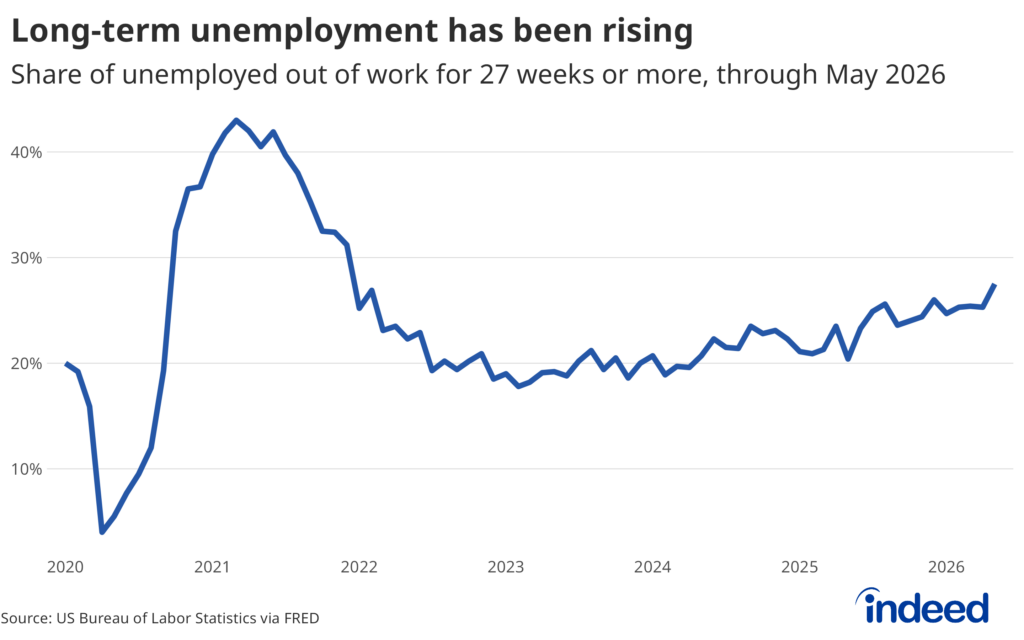
Line graph titled “Long-term unemployment has been rising” shows the share of unemployed people out of work for 27 weeks or more as of May 2026.
This kind of equilibrium can’t hold indefinitely. A market frozen between low hiring and low firing is only stable as long as nothing pushes on it. Should demand soften, the lack of hiring leaves no cushion to reabsorb workers who lose their jobs, and what now reads as a quiet labor market could tip into a rising unemployment rate quickly. The low-hire, low-fire dynamic has been remarkably durable, but durability isn’t permanence. The longer it persists, the more it’s worth watching for the first sign of which direction it finally breaks.