Key points:
- Payrolled employment broadly stabilised in May and June.
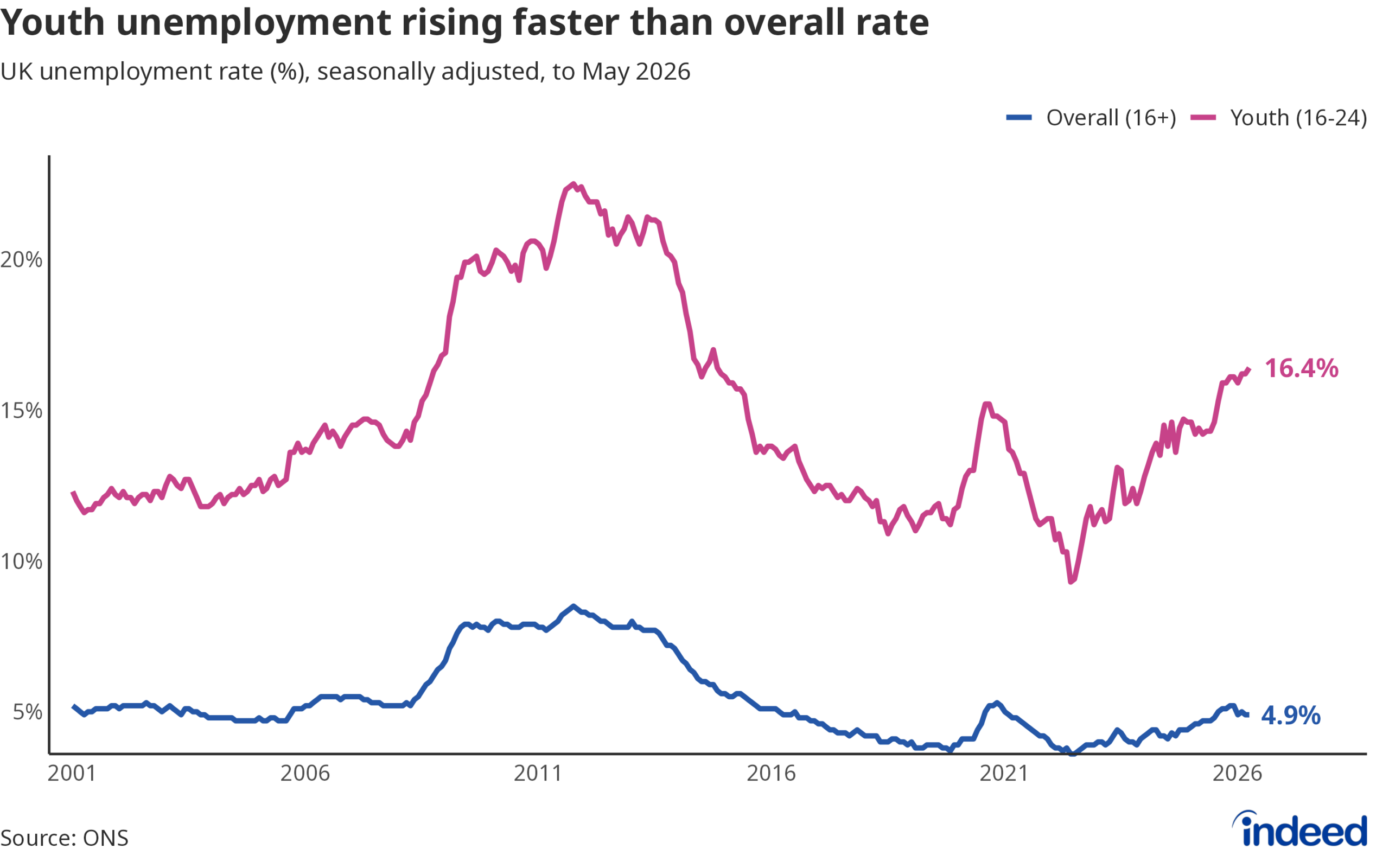
- The unemployment rate stayed at 4.9%, defying expectations for a slight increase.
- Private-sector wage growth was the slowest in five years, suggesting a benign outlook for inflation.
Today’s figures suggest little change in the health of the UK labour market, with payrolled employment having broadly stabilised in May and June and the unemployment rate flat at 4.9%. Weakness in retail and hospitality payrolls continues to be offset by resilience in public sector employment, and redundancies remain limited.
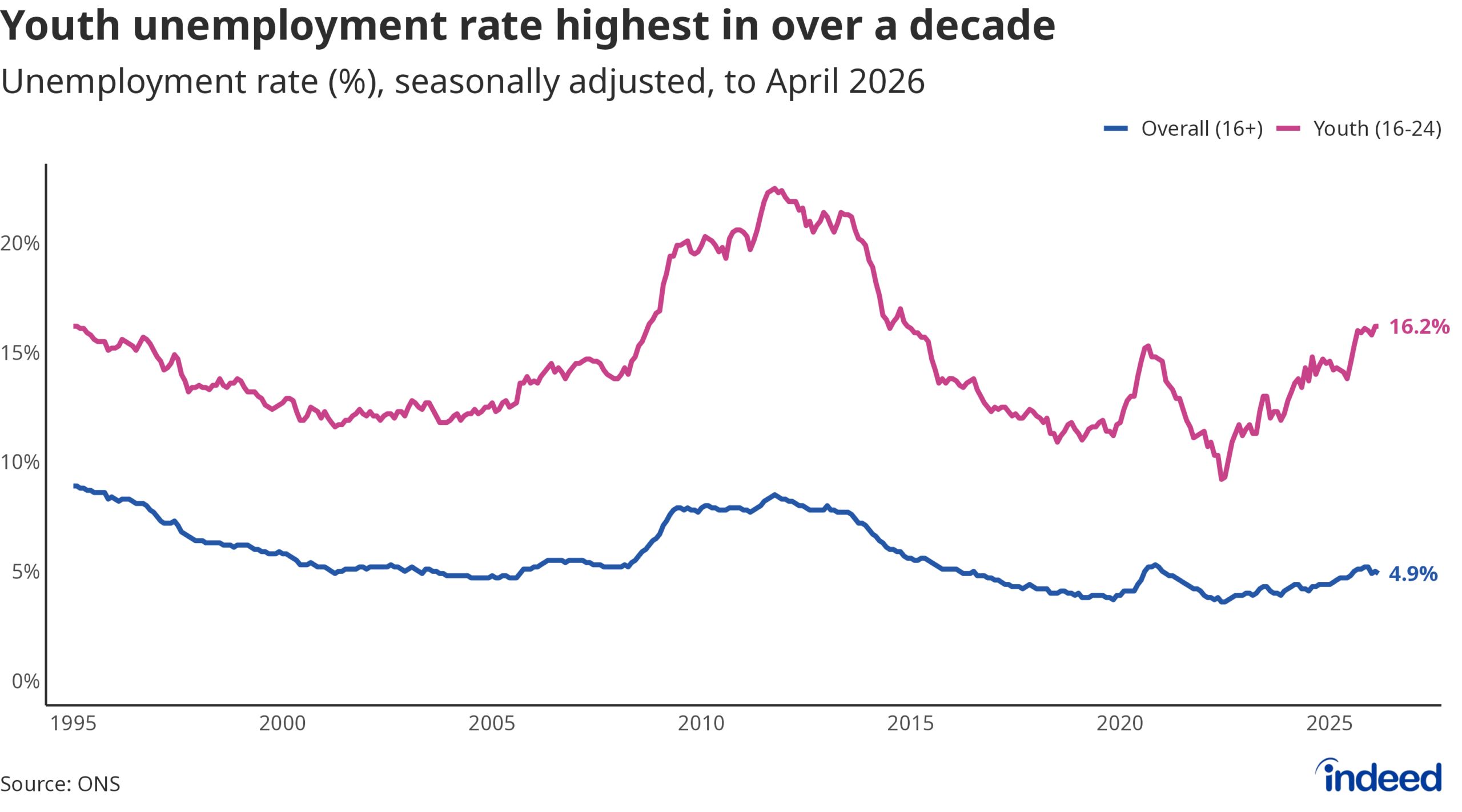
The broader picture is one of persistently hesitant employers. Businesses continue to face cost pressures and are operating in an uncertain environment, awaiting clarity on the economic direction under new prime minister, Andy Burnham. That uncertainty is weighing most heavily on entry-level and junior hiring, with youth unemployment reaching 16.4%, its highest since late 2014.
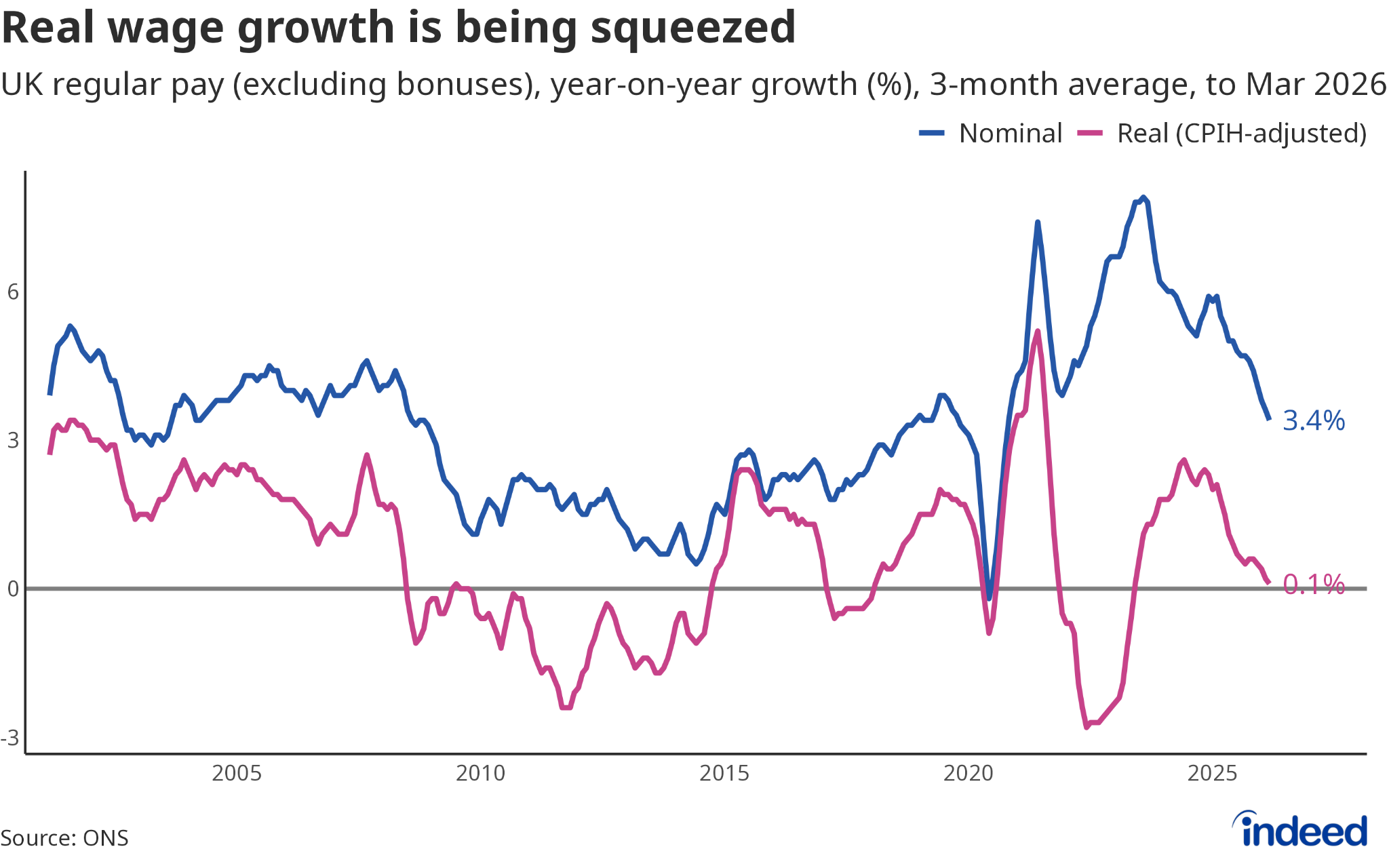
Wage growth was relatively flat at 3.4% annually in the three months to May. However, private-sector wage growth eased to a five-year low of just 2.9%, slightly below the level monetary policymakers at the Bank of England consider to be consistent with their 2% inflation target in the medium-term. Benign pay pressures within a fragile labour market suggest a limited case for the Bank to consider tightening monetary policy, even as renewed tensions in Iran put upward pressure on global energy prices.