Key points:
- Vacancies fell to a five-year low over the past three months, but revisions to payrolled employment indicate a less troubling picture than feared.
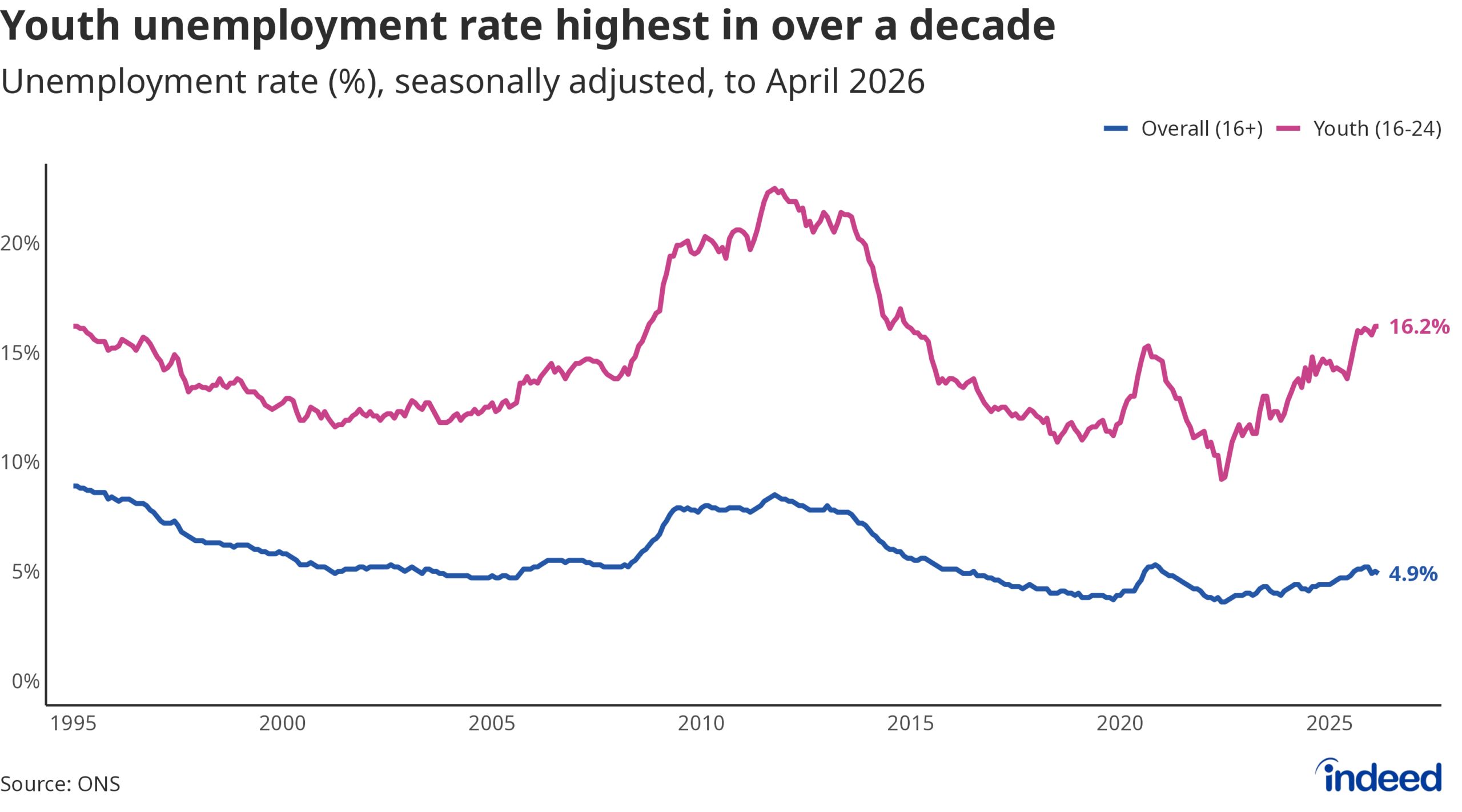
- The unemployment rate eased slightly to 4.9%, though youth unemployment remains elevated at a decade-high 16.2%.
- Easing private sector wage pressures reinforce a more benign inflation outlook for the Bank of England.
Though the UK labour market remains undeniably weak, the latest official figures offer a cautious note of reassurance after months of softening.
Vacancies declined further throughout the spring, hitting a five-year low. But the previously reported 100,000 decline in payrolled employment in April was revised to show a smaller decline of roughly half that magnitude, and May’s provisional estimate was broadly flat. The unemployment rate ticked down slightly, to 4.9%. But with youth unemployment standing at 16.2%, the highest in more than a decade, the employment picture for young people remains significantly more concerning.
Annual private sector wage growth slowed to 2.9% in the three months to April, its lowest rate in more than five years. That will have been noted by policymakers at the Bank of England in advance of their decision to to leave interest rates on hold. If the US-Iran deal holds and energy prices begin to come down, a more benign inflation outlook could take the prospect of interest rate hikes off the table. At the margin, that could help rebuild employer confidence and put a floor under hiring demand.