Key points:
- UK job postings have taken another leg down in recent weeks.
- Weakening has been broad-based across categories.
- Posted wage growth is down from peaks, but still solid.
Our Labour Market Updates examine important trends using Indeed and other labour market data. Our European Labour Market Overview chartbook provides a more comprehensive view of the European labour market. Other data, including the Indeed Wage Tracker, is regularly updated and can be accessed on our data portal.
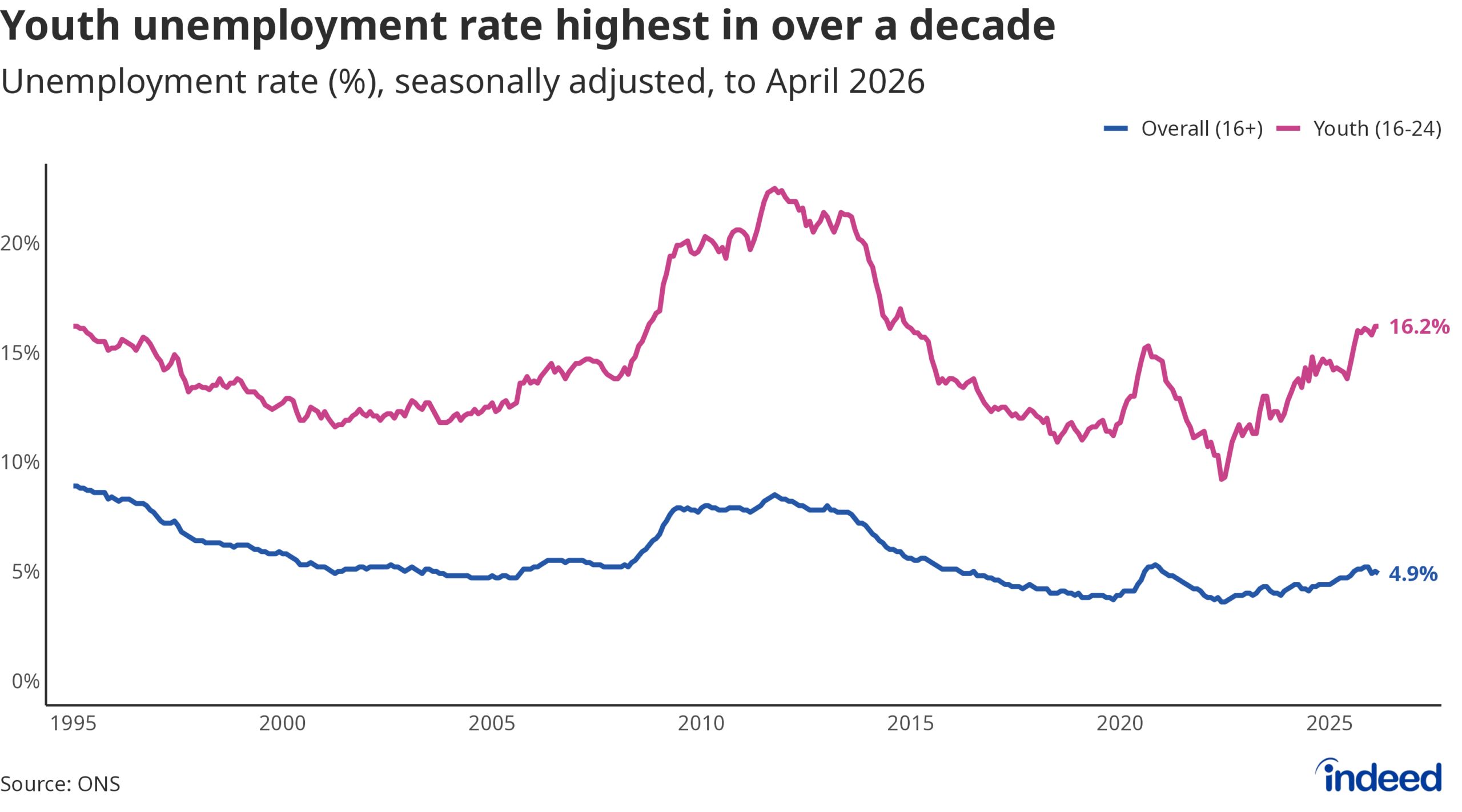
The UK labour market continues to weaken amid persistently sluggish hiring demand. Though the latest official statistics don’t yet suggest the gradual weakening is turning into a bigger jobs shakeout, employers are maintaining a cautious approach, and there remain few signs that a meaningful improvement is arriving any time soon.
Spotlight: UK job postings have continued to slide
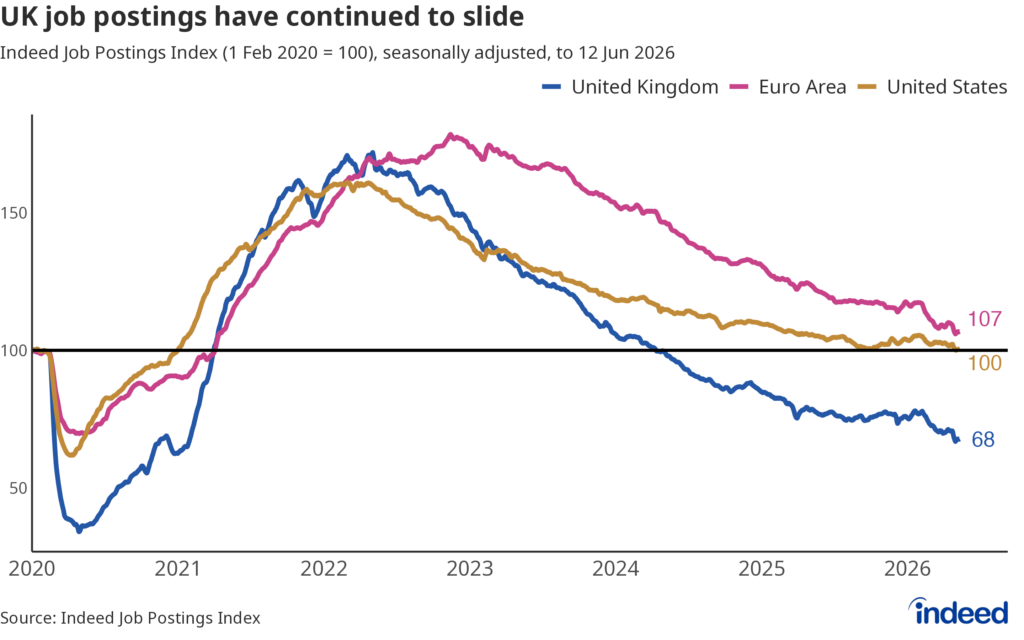
Hiring demand has continued to soften in recent weeks. Through 12 June, UK job postings were down around 5% in the month and 13% lower than a year ago. Postings now stand 32% below their 1 February 2020, pre-pandemic baseline, in contrast to peer economies, including the euro area and the US, where postings remain at or above baseline. UK employers continue to adopt a cautious approach amid ongoing cost pressures and uncertainty, with measures of confidence remaining near lows.
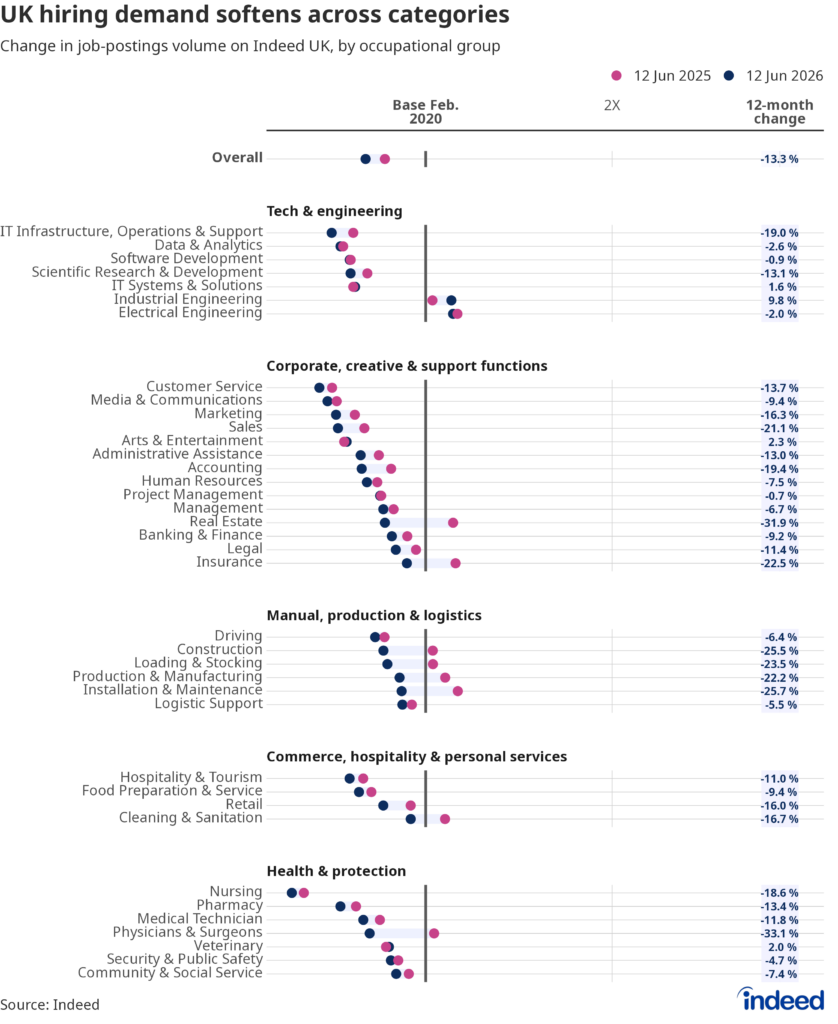
Few occupational categories have bucked the overall trend over the past year, with the vast majority having seen job posting declines. The few which have seen positive momentum include industrial engineering, IT systems & solutions, arts & entertainment and veterinary.
Posted wage growth held steady in May
The latest Indeed Wage Tracker data showed annual growth in UK posted wages was stable at 4.0% in the three months to May. That’s well down from earlier peaks, but still running above rates in the euro area and US, despite UK hiring demand having weakened substantially more.
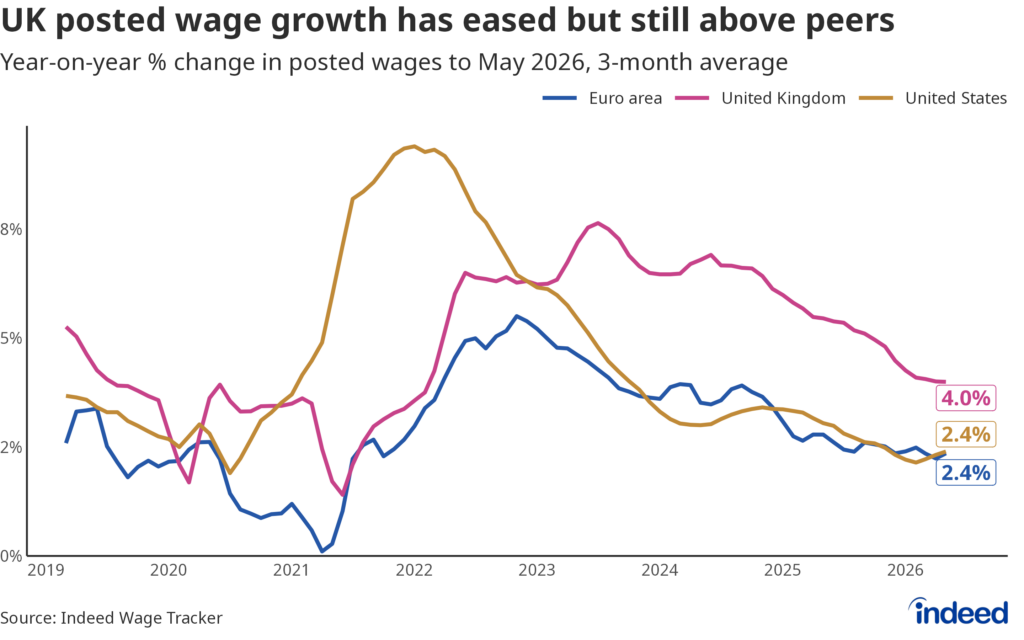
Sticky pay pressures in the UK have been a feature for some time now. The latest official data came in slightly higher than expected at 3.4% year-on-year for regular earnings, mainly due to a bump in public sector pay. But after accounting for inflation, workers saw their real wages rise just 0.1% annually.
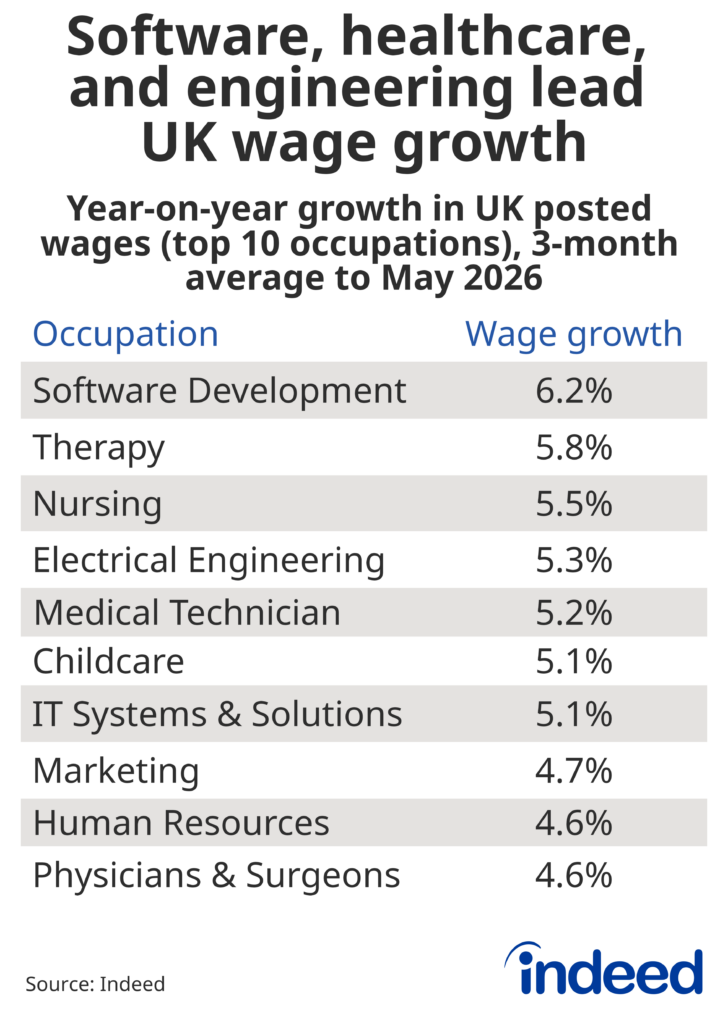
Several categories continued to see strong posted wage growth in the three months to May, led by typically harder-to-fill occupations in tech, healthcare and engineering.
Conclusion
The UK labour market continues to weaken, with low employer confidence and cost pressures weighing on hiring. While the data do not yet point to the slide turning into a full-blown slump, there appears to be little sign of a near-term recovery.
A notable feature of the current landscape is the resilience of wage growth despite softer hiring activity, particularly in specialist areas such as technology, healthcare and engineering. For employers, this suggests improved access to talent in many occupations, but continued competition for scarce skills. For recruiters, opportunities are likely to be concentrated in sectors with persistent labour shortages, making targeted hiring strategies more important than volume-driven recruitment.
Hiring Lab Data
Job postings data is available on our Data Portal. We also host the underlying job-postings chart data on GitHub as downloadable CSV files. Typically, it will be updated with the latest data one day after this blog post is published.
Methodology
Data on seasonally adjusted Indeed job postings is an index of the number of seasonally adjusted job postings on a given day, using a seven-day trailing average. Feb. 1, 2020, is our pre-pandemic baseline, so the index is set to 100 on that day.
To calculate the average rate of wage growth, we follow an approach similar to the Atlanta Fed US Wage Growth Tracker, but we track jobs, not individuals. We begin by calculating the median posted wage for each country, month, job title, region and salary type (hourly, monthly or annual). Within each country, we then calculate year-on-year wage growth for each job title-region-salary type combination, generating a monthly distribution. Our monthly measure of wage growth for the country is the median of that distribution.
The number of job postings on Indeed.com, whether related to paid or unpaid job solicitations, is not indicative of potential revenue or earnings of Indeed, which comprises a significant percentage of the HR Technology segment of its parent company, Recruit Holdings Co., Ltd. Job posting numbers are provided for information purposes only and should not be viewed as an indicator of performance of Indeed or Recruit. Please refer to the Recruit Holdings investor relations website and regulatory filings in Japan for more detailed information on revenue generation by Recruit’s HR Technology segment.