
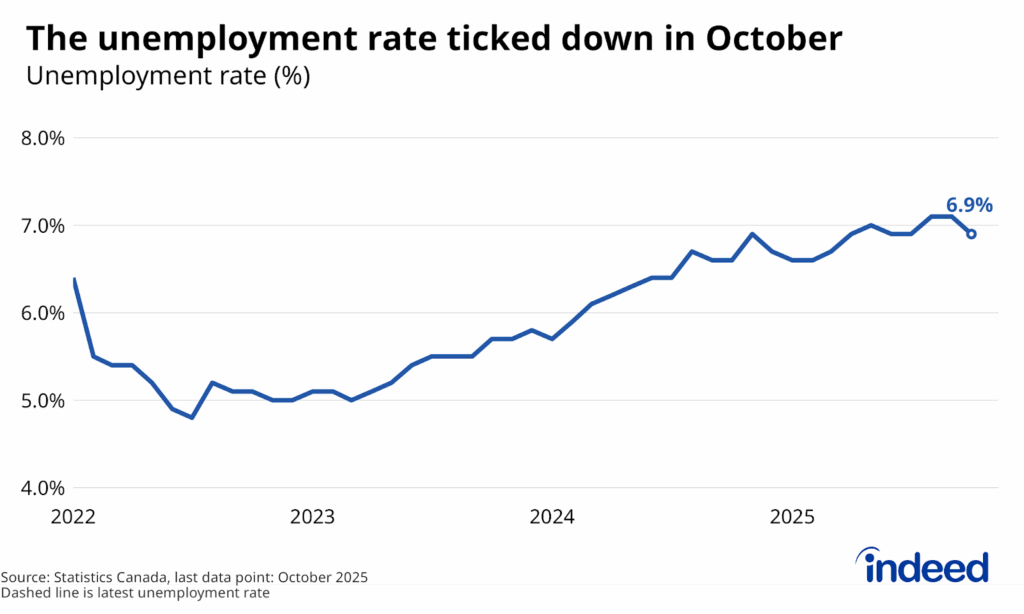
The Labour Force Survey continued its wild ride of late, coming in on the upside of a second straight month after losses over the summer. Employment rose faster than population growth, helping send the unemployment rate down from 7.1% to 6.9%, where it stood in July. A year earlier, the jobless rate was 6.6%, highlighting how the labour market has softened over this period, but not dramatically so.
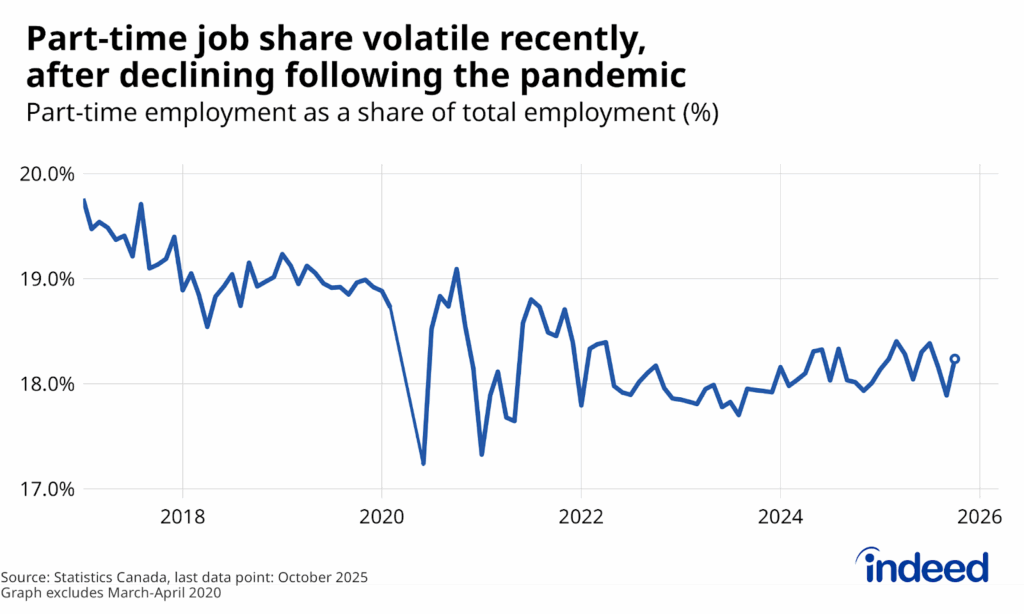
Not only have the headline job numbers been volatile, but the split between full-time and part-time jobs has also been unstable. Part-time employment accounted for the entire net increase in October, rubbing some of the shine off the solid headline. But this increase followed two steep declines. Overall, the part-time share of total employment has fluctuated between 17.9 and 18.4% in 2025, with little clear trend, with October coming in at 18.2%. Zooming out, the share of workers typically working less than 30 hours per week is down from its 19% pre-pandemic norms, likely reflecting the types of industries that’ve added jobs faster over this period (such as professional services and public administration).
As year-end approaches, it’ll be tough to expect more from the labour market beyond muddling through, without more material improvement in the broader economy. Employment in goods-producing industries like manufacturing and construction has slipped in 2025 (despite manufacturing edging up in October), and the uncertain trade situation remains a cloud over the outlook. But for now, low layoff rates are keeping the situation stable, as we wait to see if the economic situation shifts.