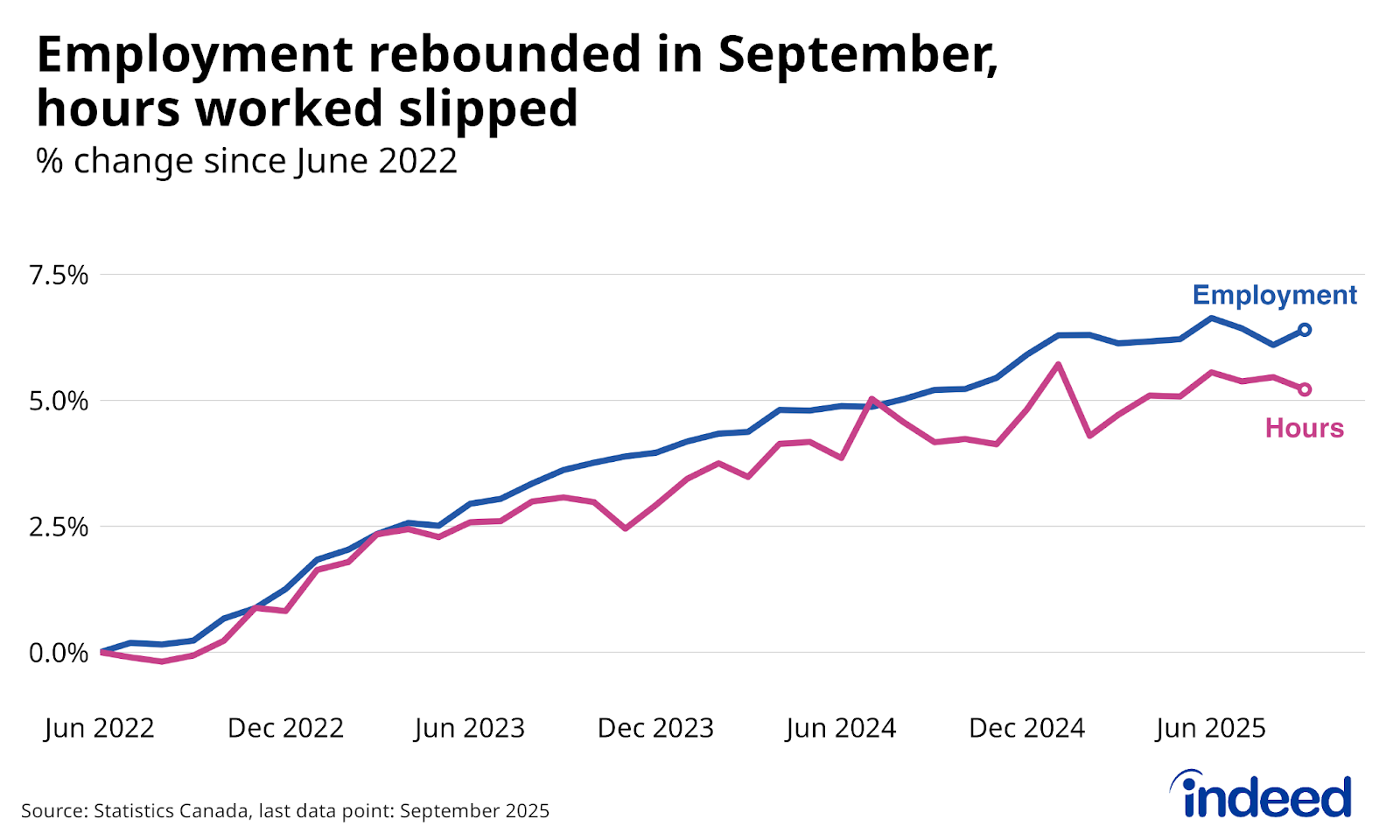
The Canadian labour market capped off a choppy third quarter on the upside, with employment posting a solid 60,000 increase, reversing nearly all of the decline of a month prior. On net, the number of people working was nearly unchanged from May, a sign of soft, but not spiraling underlying conditions.
Avoiding a third straight loss was good news. Other details in the report came in mixed: full-time work drove the jobs increase, but total hours worked, which had been steadier than employment, ticked down. The unemployment rate held steady at 7.1%, well above where it stood two years earlier, and in-line with 2016 levels.
About half of September’s net increase came from the public sector, which along with self-employment had slipped in August. Meanwhile within the private sector, both manufacturing and natural resources posted gains, following weakness earlier in the year. Trade-exposed industries are far from out of the woods given ongoing tariff uncertainty. But the solid month highlights how things are holding on, at least in the near-term.
The good news from today’s Labour Force Survey report is that particularly weak numbers from July and August contained as much noise as signal. Instead, the underlying trend appears more consistent with the gradually deteriorating labour market of the past few years. This has been relatively good news for those employed in stable jobs, though wage growth, which came in at 3.3% year-over-year, has softened somewhat. However, it also means the difficult market facing job seekers also continues.