Key points:
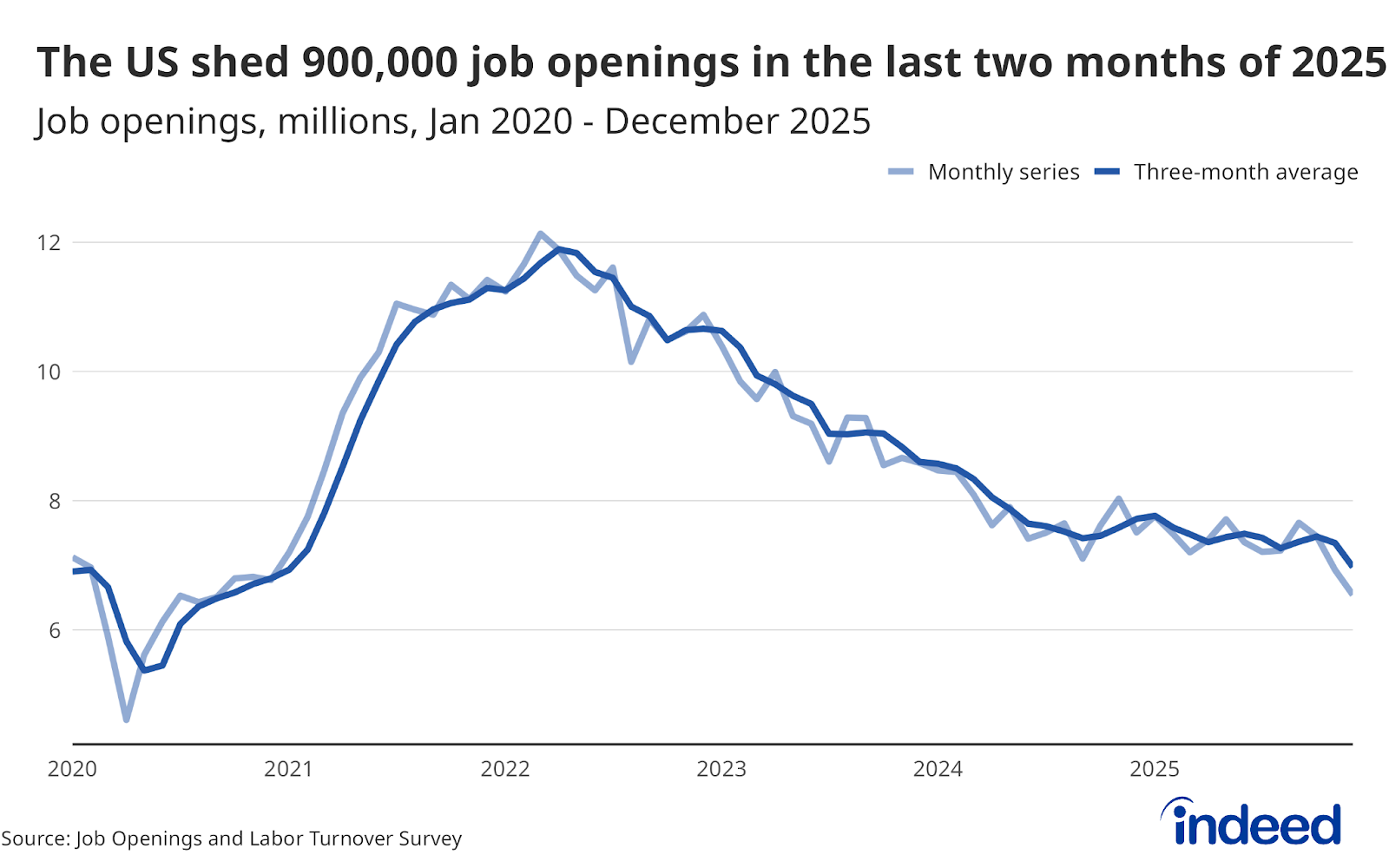
- US job openings fell to 6.5 million in December from a downwardly revised 6.9 million in November, according to the US Bureau of Labor Statistics.
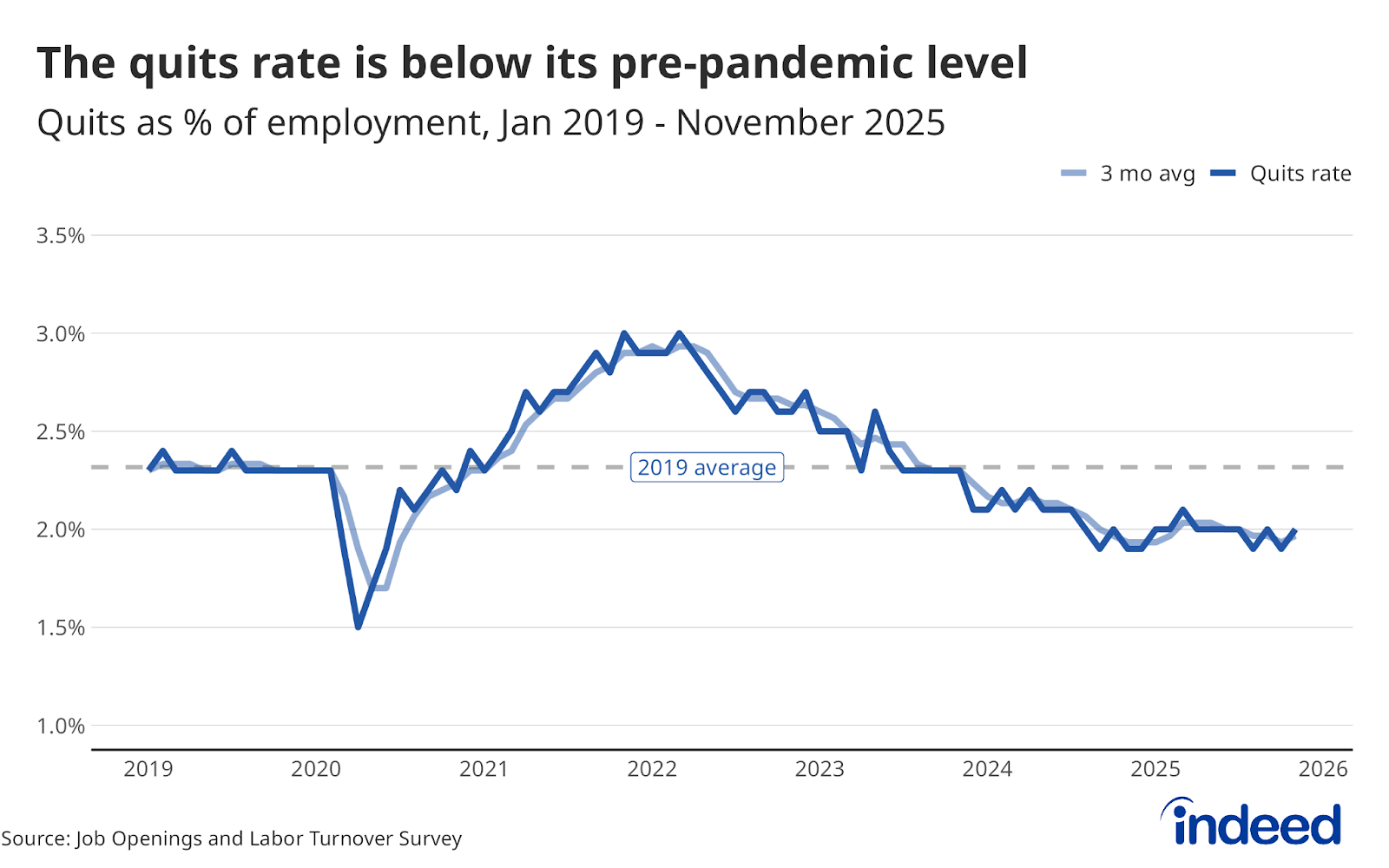
- The quits rate held steady at 2% and remains below its 2019 average.
- Total layoffs and discharges were little changed at 1.8 million, to a layoff rate of 1.1%.
The labor market spent much of 2025 bending, but not breaking — and ended the year perilously close to a definitive breaking point. There were almost 1 million more unemployed people in the US at the end of 2025 than there were available jobs for them, according to the December JOLTS report, the widest such gap (outside of the pandemic) since 2017. The low-hire, low-fire dynamic that has dominated the labor market for much of the past year continued to generally hold in December, with layoffs remaining low and unemployment actually declining slightly. But the small pockets of strength that had been buoying the market appear to be fading quickly. The number of job postings itself has fallen to 2017 levels, despite almost a decade of economic and population growth since then. Job openings in the healthcare sector, which accounted for the large bulk of overall job growth in 2025, fell by more than 10% in the last two months of 2025. And there are signs that layoffs, while still low overall, are beginning to spread beyond the tech sector and into the broader economy, a very worrisome trend if it continues.
In December 2025, there were 7.5 million people out of work and actively looking, and just 6.5 million job vacancies (down from a downwardly revised 6.9 million in November). Declines in job openings have been especially severe in a handful of sectors over the past few months, including financial activities (-25.1%, or 86,000 openings) and professional & business services (-21.8%, or 284,000 openings). Most notably, postings in the healthcare and social assistance subsector have declined by 10.8% (152,000 openings) since October, a sign the tide may be turning in the sector that dominated job growth in 2025.
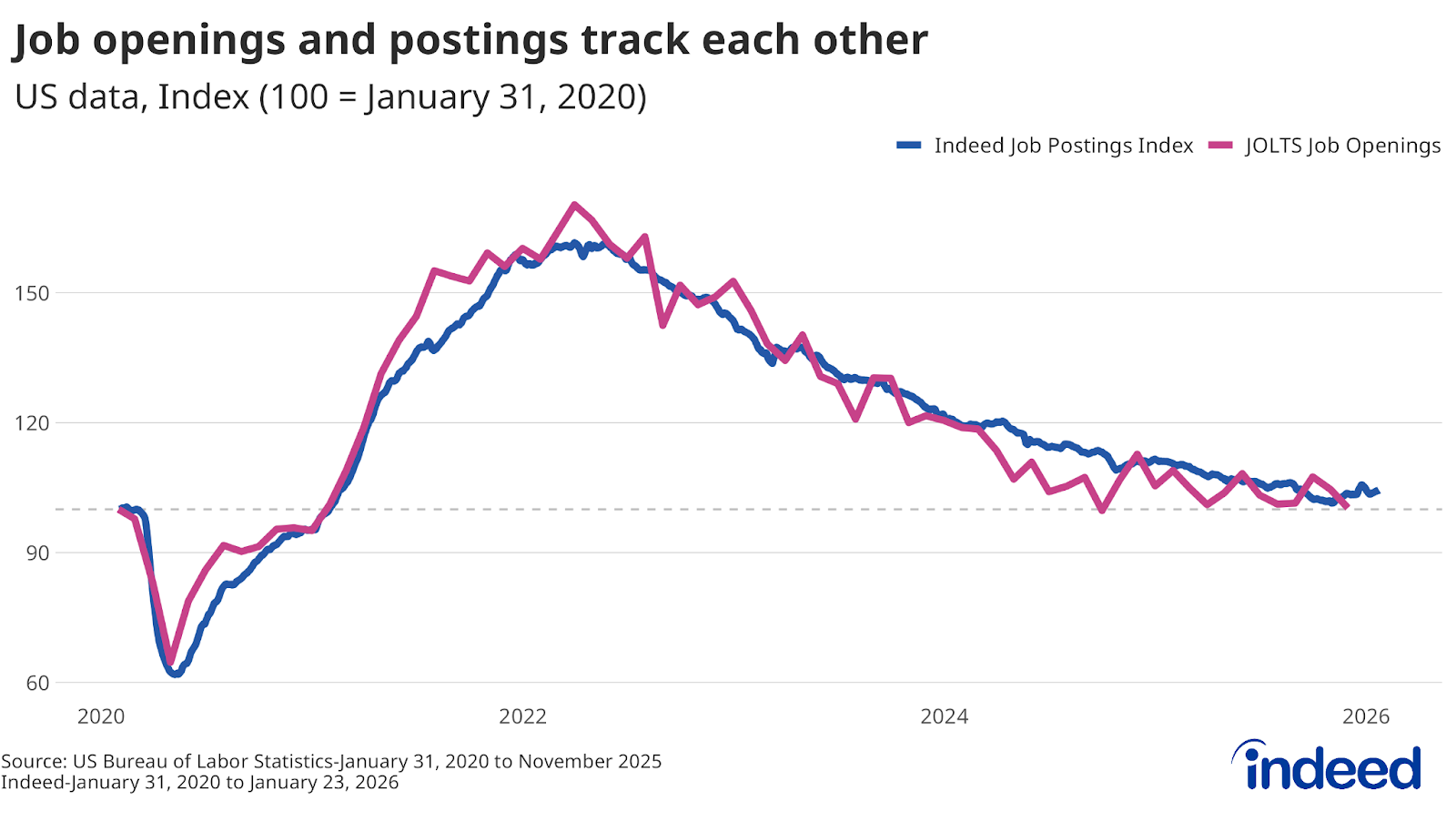
Openings data can be volatile, and it is not uncommon to see the number move by hundreds of thousands from month to month, but December’s drop and a large downward revision to the November data are concerning. However, it is still possible to squint at the bigger picture and come away with a somewhat positive view of the market. Job openings were relatively stable through the first 10 months of 2025, and real-time job postings data from Indeed do not show any significant deterioration in demand through the end of January. Wage growth remains decent, unemployment is low, and data suggest that the labor market may be able to maintain this low-hire, low-fire pattern for at least a little while – but not forever. The overall layoff rate has remained low for several years now, despite ongoing high-profile layoff announcements coming from the information (tech) industry. But layoff announcements from several large non-tech employers have also made headlines recently. Public layoff announcements don’t always translate into immediate changes in the layoff rate, but a widening range of companies making these announcements is never encouraging, and could signal that any coming breaking point may be uncomfortably close.