Key points:
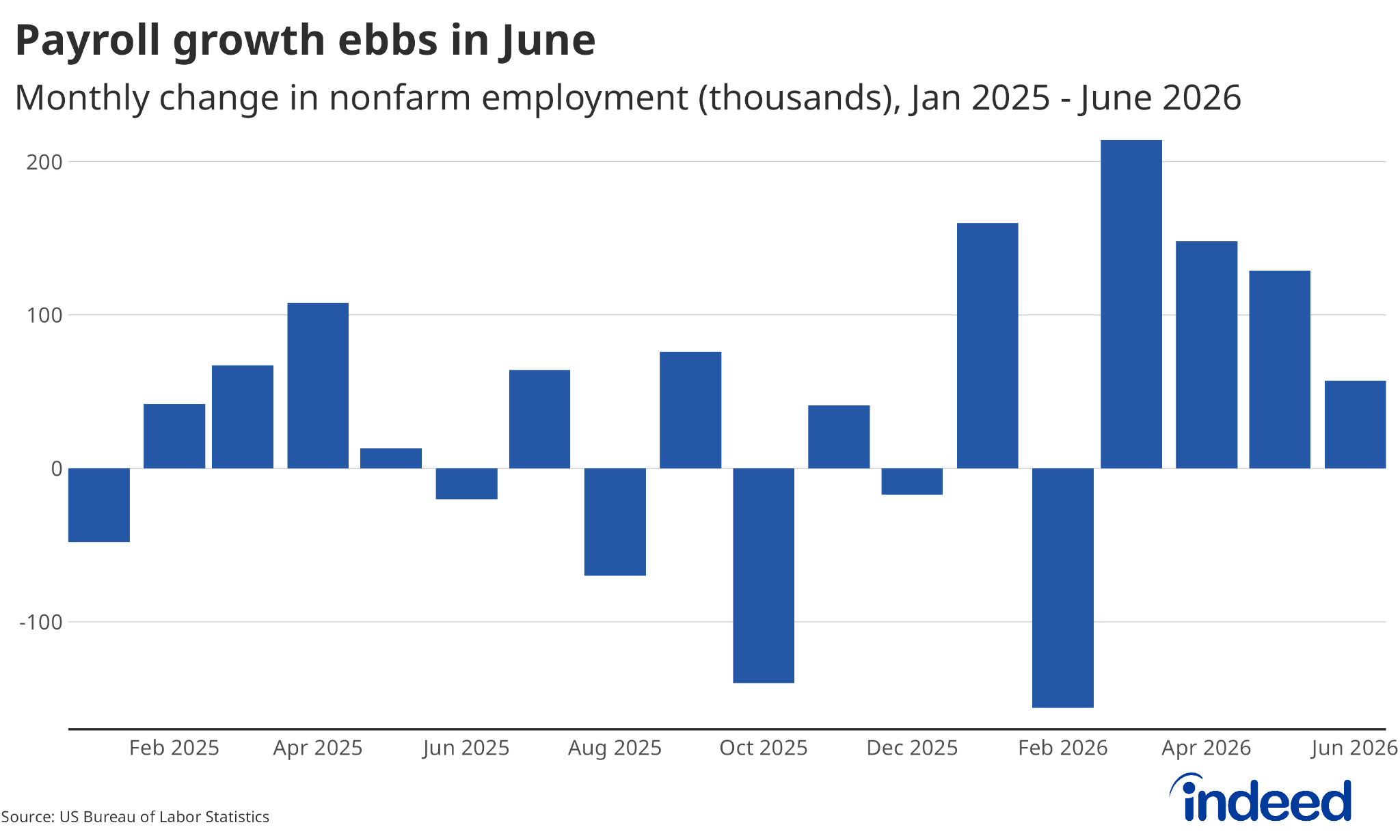
- Nonfarm employers lost 23,000 jobs in July, and the unemployment rate ticked down to 4.1%, according to the US Bureau of Labor Statistics.
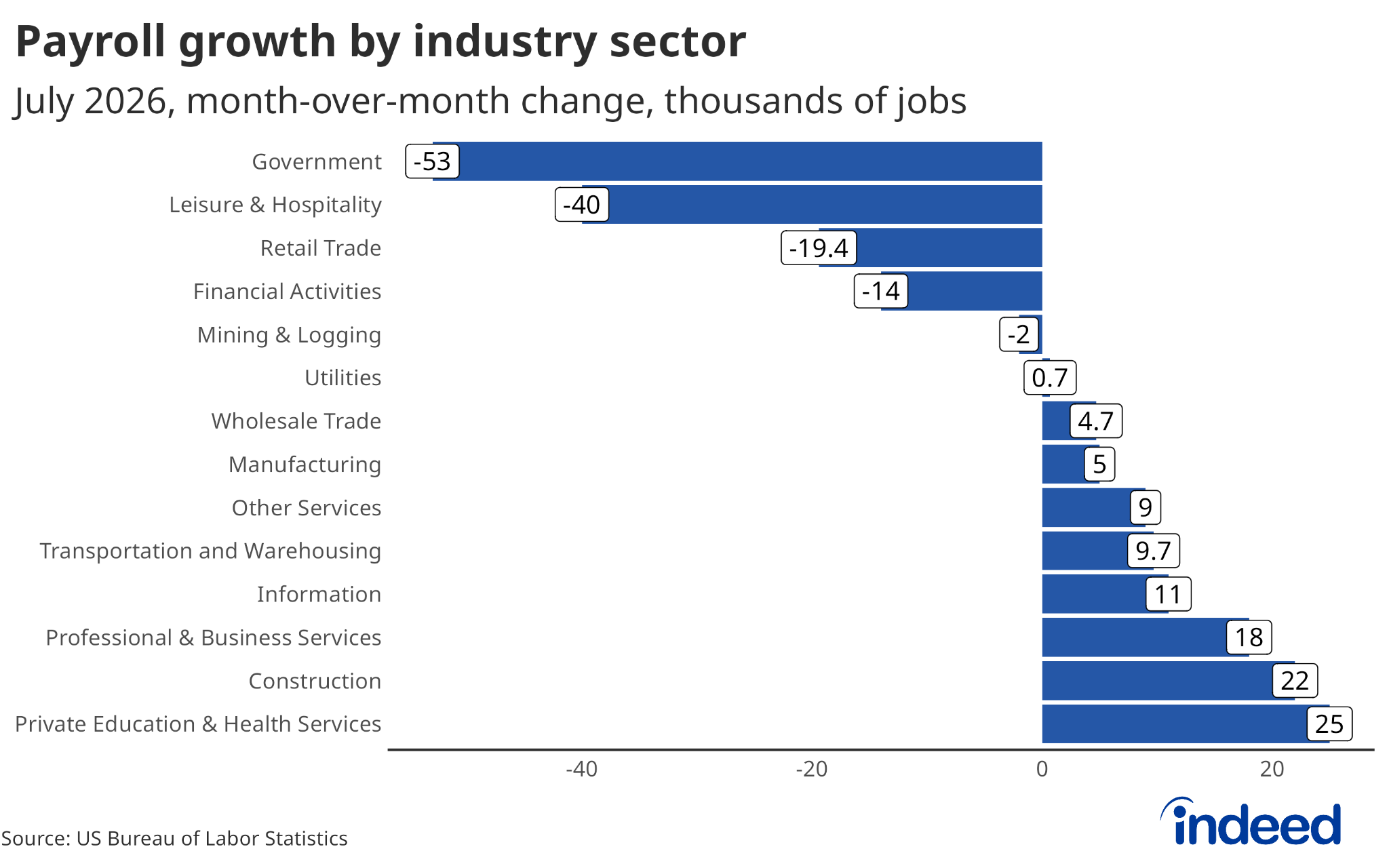
- Government lost over 50,000 jobs in July 2026, followed by Leisure & Hospitality, which lost 40,000 jobs.
- Prime-age labor force participation rate edged up to 83.4%.
It’s hard to find many bright spots in today’s jobs report, as nonfarm payroll employment unexpectedly fell by 23,000 workers and employment gains from earlier in the year were largely revised away. Revisions shaved a combined 103,000 jobs from the May and June reports, meaning the US has added an average of just 34,000 jobs per month over the past year. For most of the past year, bad news on jobs was good news for markets, since a weaker labor market meant the Federal Reserve was closer to cutting interest rates. With inflation still stubborn, today’s weak report exposes just how little cushion the job market has left should the Fed be forced to tighten into a slowdown. July’s anemic number falls into concerning territory and raises questions about whether the labor market is sturdy enough to remain aloft.
If you squint really hard, it is possible to find some small glimmers of optimism in the data. Government jobs, primarily in local education, posted the largest month-over-month decrease, 53,000 jobs, in July. This is most likely due to a misfire in the seasonal adjustment process or a shift in typical hiring timelines, so it’s very possible we’ll see some of that reversed in the next report. Beyond that, the unemployment rate fell to 4.1% without a massive drop in labor force participation. June’s near-historic plunge in prime-age labor force participation from 83.9% to 83.3% didn’t worsen in July, and participation clawed back some ground to 83.4%.
The labor market has descended from the near-stratospheric heights of 2021 and 2022 and is facing turbulence at lower altitudes. In addition to the bumpiness in today’s report, the labor market continues to face several headwinds, including stubborn inflation, high energy costs, and emerging labor supply constraints. Despite those challenges, the economy is widely expected to hold its flight path over the coming year. Quarterly survey data from the Indeed Hiring Lab Labor Market Outlook Survey show that economists and labor market experts expect only a slight cooling through mid-2027, with modest changes in unemployment and job postings. Don’t put too much stock in a single report, but don’t ignore the fact that the plane is starting to shake as the labor market looks to be entering a rough patch.