Key points:
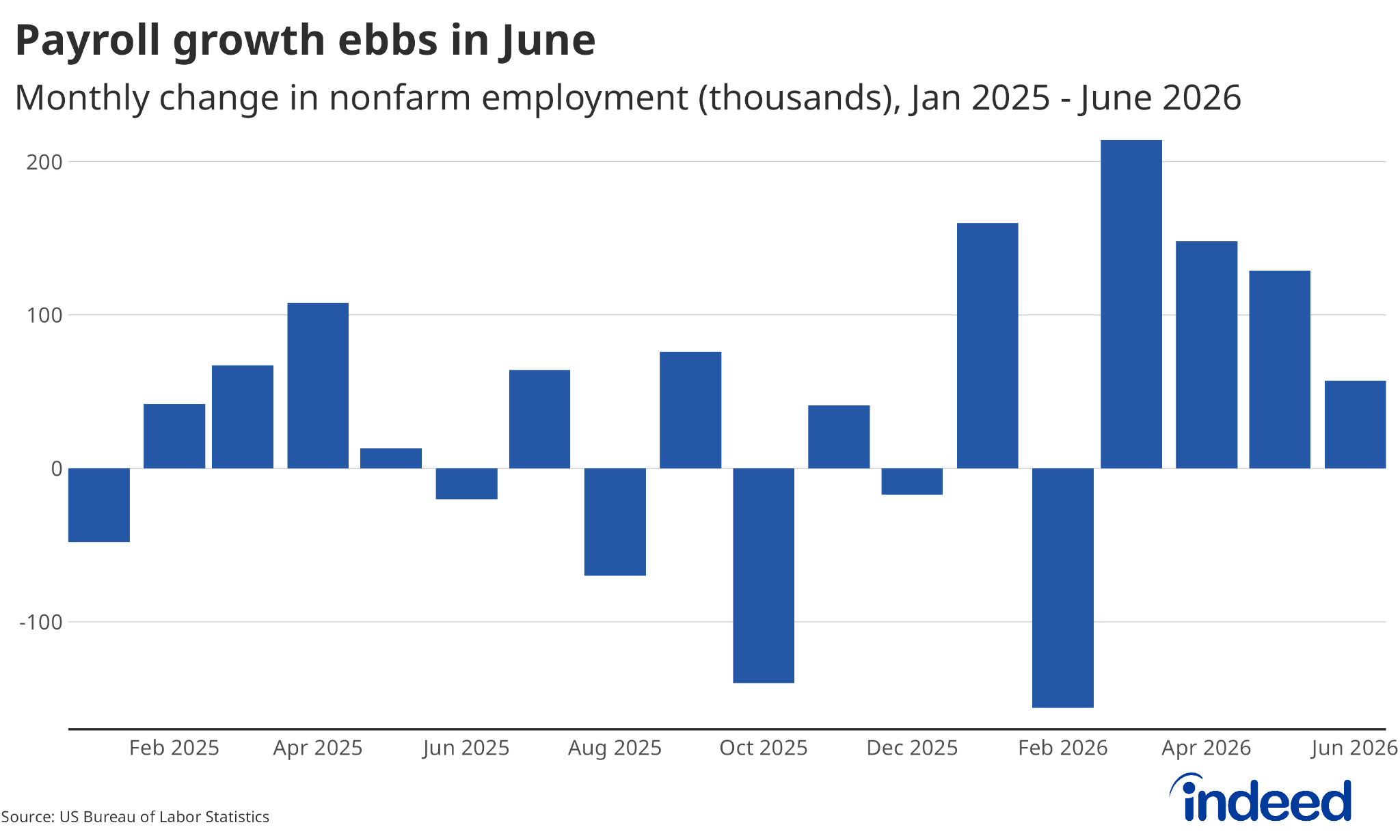
- Employers added 57,000 jobs in June, according to the Bureau of Labor Statistics, and figures from April and May were revised down by a combined 74,000 jobs.
- The unemployment rate ticked down to 4.2% in June due to declines in both the labor force and participation rates.
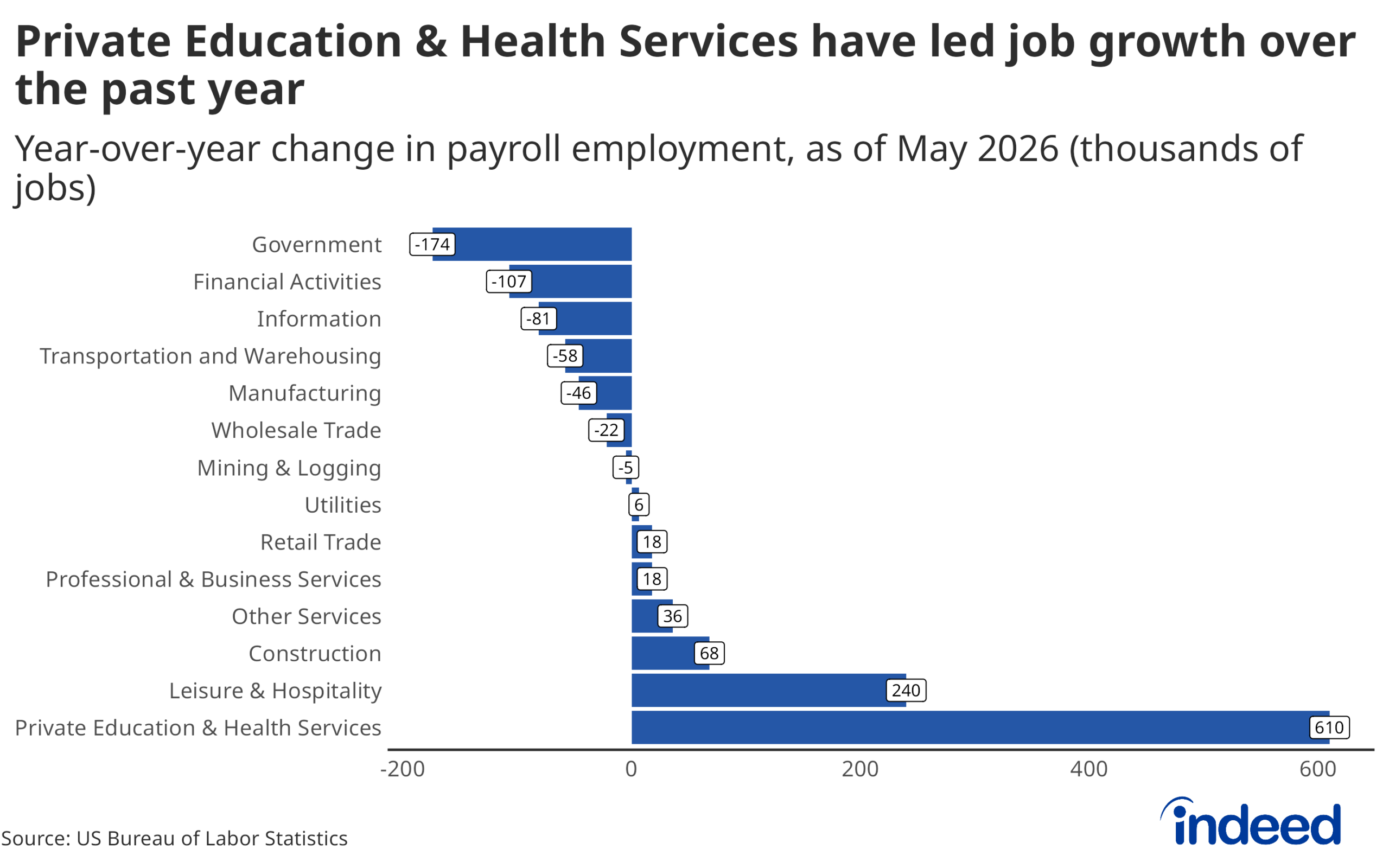
- Strength was concentrated in private education and health services and professional and business services, while leisure and hospitality showed the biggest losses.
There is a moment between an incoming and an outgoing tide when the water hardly moves in either direction – known as slack water. That is a fair description of the labor market right now. Relatively few workers are being pulled into new jobs, and few are being pushed out of old ones. Employers added 57,000 jobs in June, much lower than consensus expected, and far below May’s report. The unemployment rate ticked down slightly to 4.2%, according to the US Bureau of Labor Statistics. This decrease was due to declines in labor force and participation rather than a decline in the number of unemployed people.
May’s larger gain briefly suggested the tide might be turning; June makes clear it was the exception, not the new rule. On its face, this is a modest but fine report. The trouble is what ‘fine’ has come to mean: June’s gain isn’t evidence of a strong current drawing people in — it’s the small amount of water left standing when both the inflow and the outflow have gone nearly quiet.
June’s report showed strong increases, yet again, in private education and health services, which added 69,000 jobs spread pretty evenly across subsectors. Professional and business services added an additional 36,000 jobs. On the flip side, leisure and hospitality lost 61,000 jobs, reversing the sector’s surprisingly strong performance in May. This is notable given current activity around the World Cup and America’s 250th birthday celebrations. All other sectors showed little movement. Taken together, the picture is one of a labor market in standstill.
That stillness lands very differently depending on your situation. If you already have a job, slack water is reassuring — layoffs are scarce and the ground under your feet feels relatively secure. If you are looking for a job, the same conditions are the whole problem, with no current to carry you forward. There are few new openings to pursue, with hiring at levels near where we were 11 years ago, when the labor force was nearly 13 million people fewer than it is today.
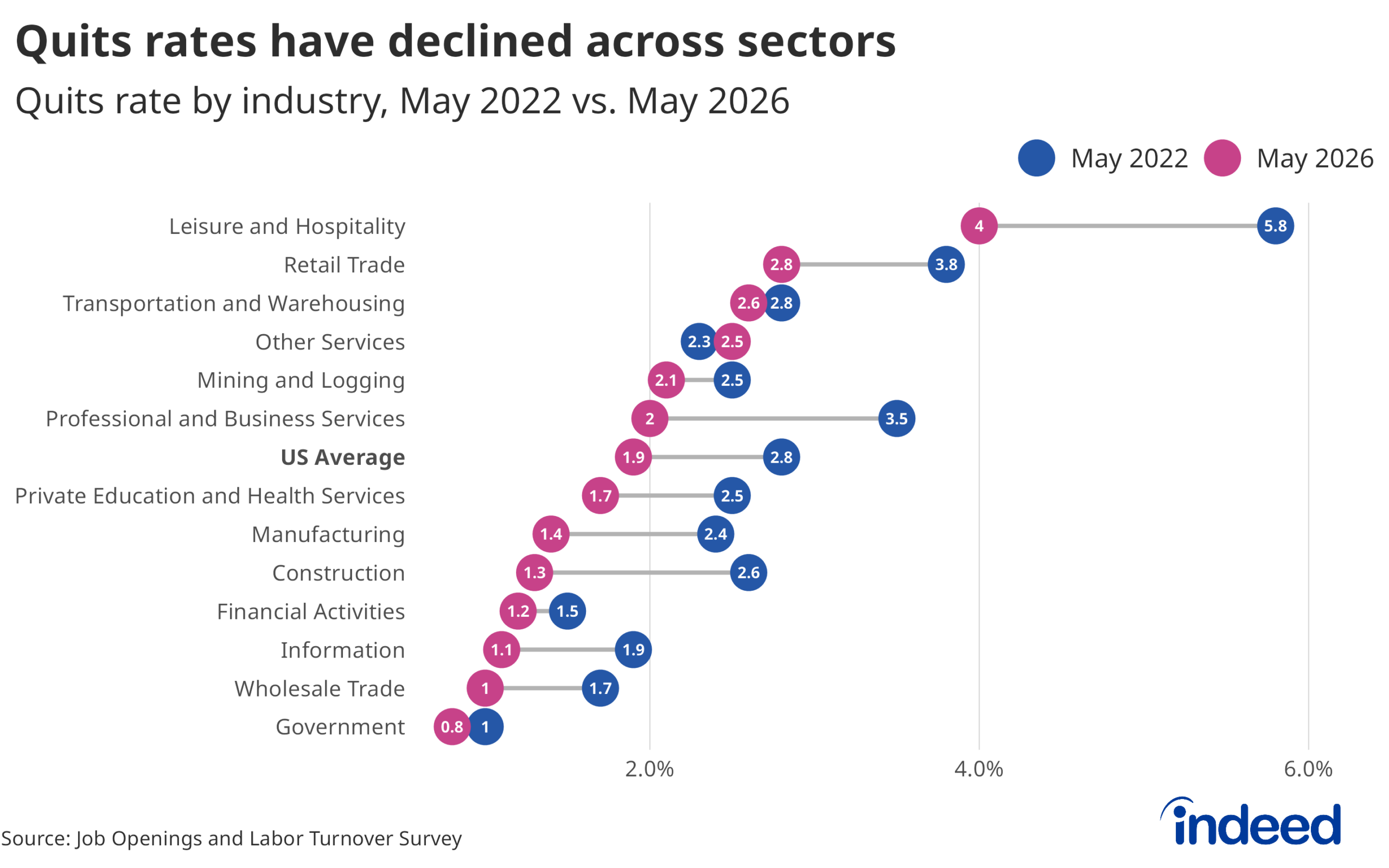
The catch with slack water is that it is a turning point, not a resting state. It happens in the space between change, as tides rise or fall. The stability of a stagnant labor market depends entirely on separations staying this scarce or, conversely, hires remaining subdued. It would not take much — a modest rise in layoffs, or a few more workers deciding to quit — to pull the net negative. More positively, we could see more robust employment growth if hiring picked up across a broader swath of the labor market. The tide has sat slack for an unusually long stretch at this point, but it’s worth remembering that it always, eventually, turns.