
Key points:
- Workers’ purchasing power is slipping as inflation outpaces wage growth.
- Long-term yields have climbed back toward post-pandemic peaks despite easier policy rates, threatening to further undermine already tepid hiring plans.
See our full European Labour Market Overview chartbook for a more comprehensive view of the European labour market.
Inflationary pressures from the global energy price shock have started to show in the European data. With annual price growth climbing to 3% in Europe in April, workers’ wages are no longer keeping up with cost-of-living increases, according to our wage tracker, which shows year-over-year growth in posted wages in Europe at just 2.3%. The United Kingdom remains an outlier with posted wage growth of 4% over the year amid inflation of 2.8%, but even so, real wage growth is stalling. The slip in real purchasing power will weigh on demand in the coming months, adding to other headwinds facing the economy.
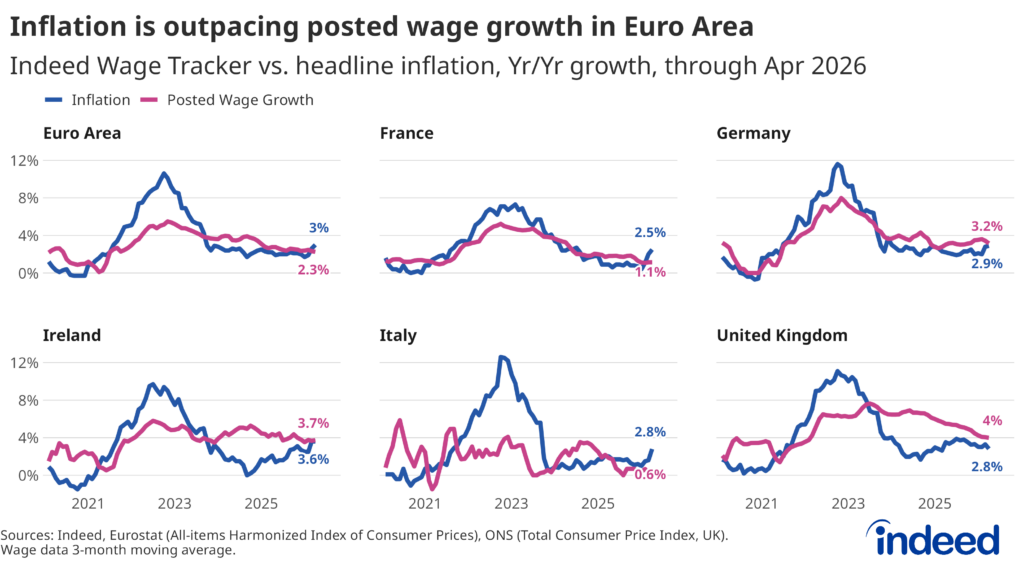
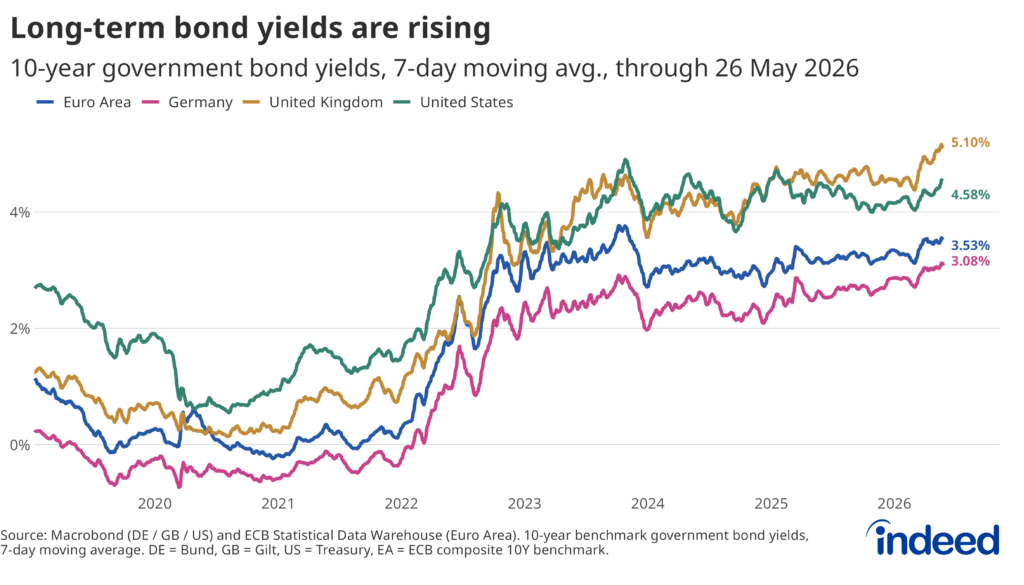
Among those headwinds, long-term interest rates have climbed over the past month as investors confront the pressures of persistent inflation, heightened government borrowing and the prospect of interest rate hikes later this year. Yields for the 10-year German Bund and UK Gilt, in particular, are testing their previous peaks this cycle, which is notable given official central bank interest rates currently sit over 150 basis points lower. Elevated borrowing costs could dissuade businesses from undertaking new projects and, more generally, from expanding, weighing on already tepid hiring plans.
We will be watching our wage tracker closely in the coming months for any sign of second-order effects in wage-price dynamics. That is, with real wages eroding, will workers push for higher pay? Given an already cautious outlook for labour demand, it’s questionable whether such a wage-price spiral materialises, as sluggish demand is likely to weaken workers’ bargaining power.
See our full European Labour Market Overview chartbook for a more comprehensive view of the European labour market. Other data, including the Indeed Wage Tracker, is regularly updated and can be accessed on our data portal.