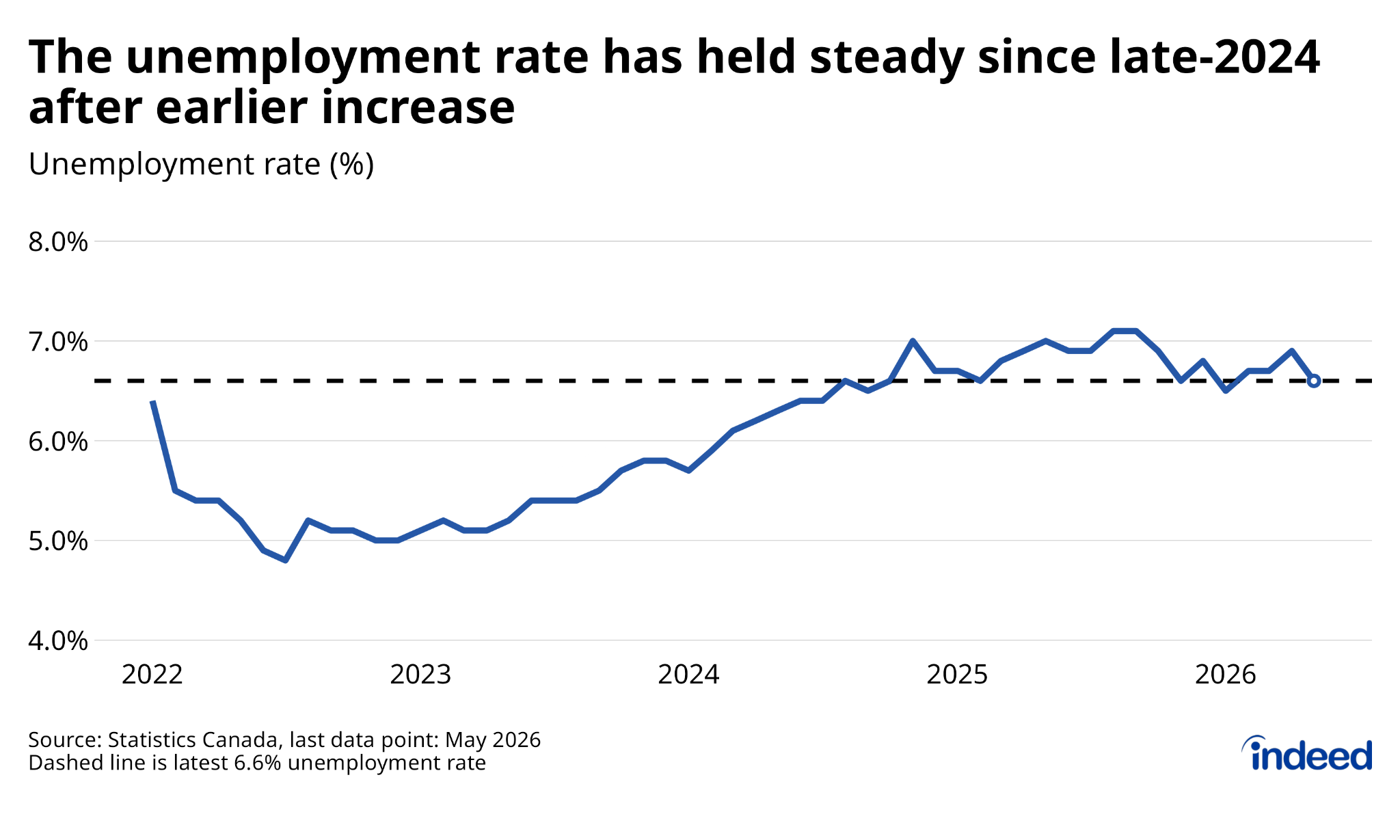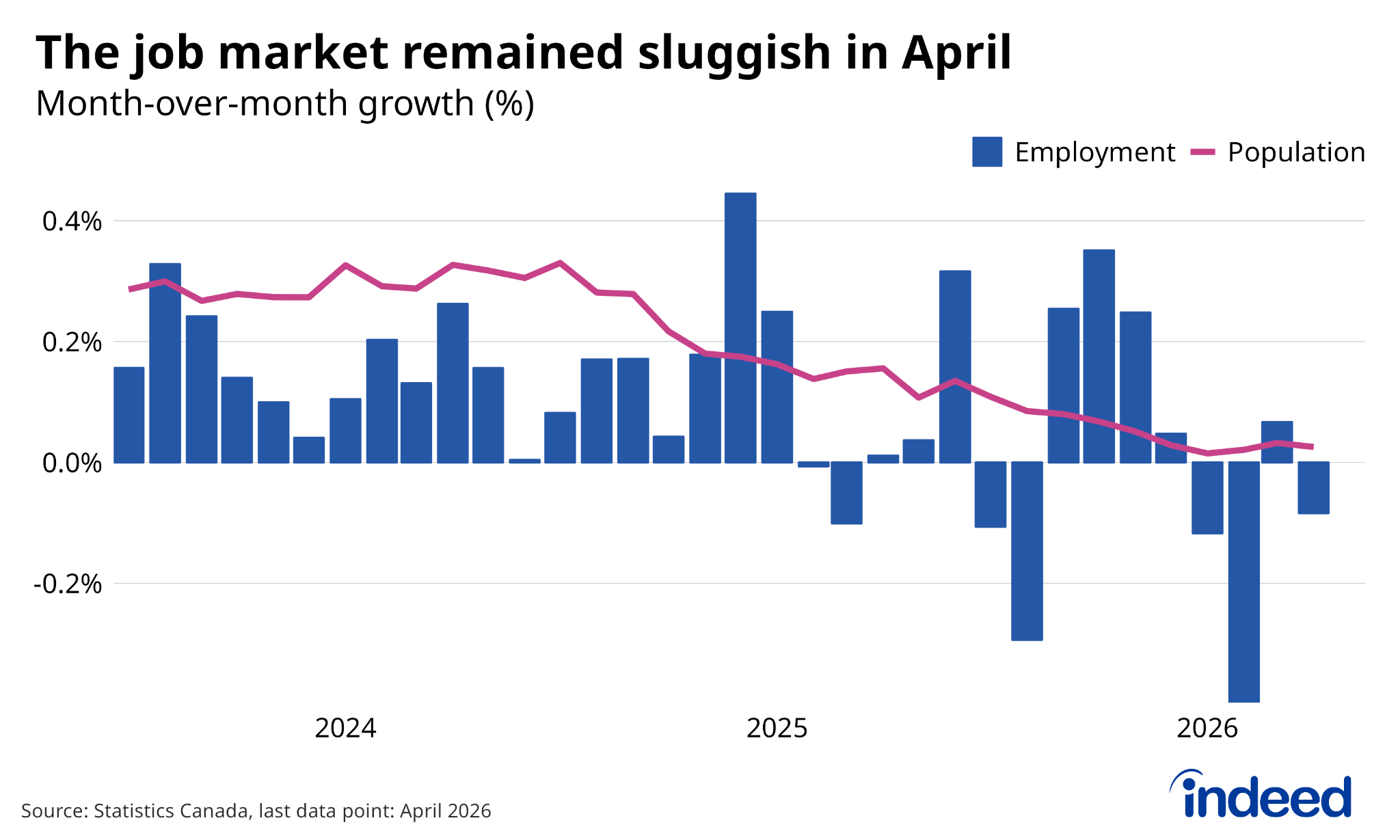
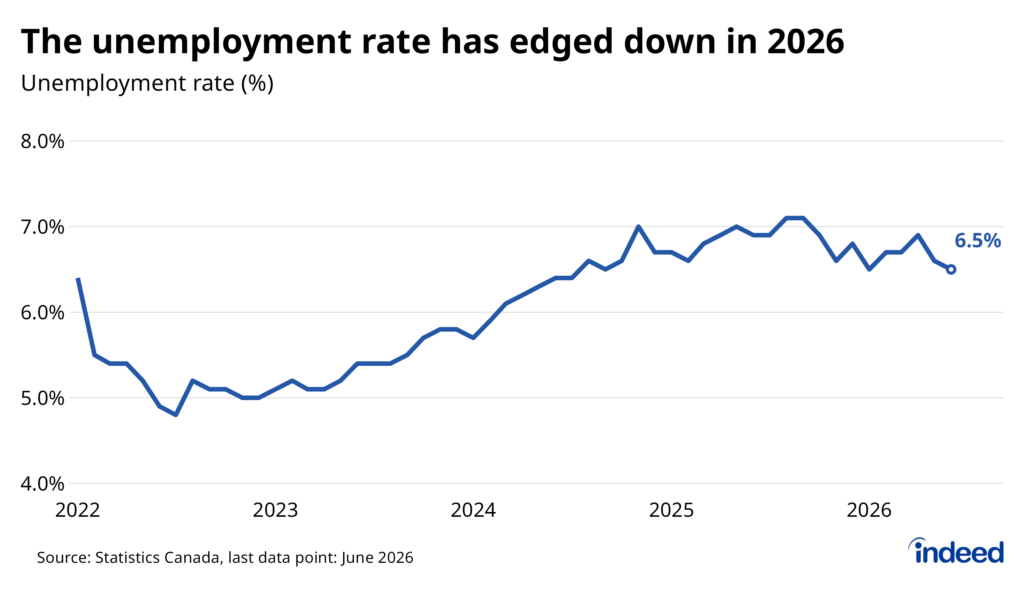
June’s LFS was not a blockbuster report, but one that still took the labour market in the right direction. Employment edged up after a strong showing in May, ending the second quarter with some momentum after starting the year on a downswing. With the backdrop of slight population growth, the gains were strong enough to send the unemployment rate back down 0.1 percentage point to 6.5%, matching its lowest level since 2024.
Lower-paying service industries drove the increase, with all net job gains in June coming from wholesale and retail trade, accommodation and food services, and information and culture. Relatedly, the overall employment increase was concentrated in part-time jobs. The rise in services appears more closely related to a more robust summer job market across the country, rather than to the World Cup. In particular, employment ticked down in Toronto and was relatively flat in Vancouver, in contrast to a solid rise in Montreal. Meanwhile, youth employment rates have perked up, particularly among those in their early 20s.
The weaker portions of the report were concentrated in manufacturing and construction, which both declined in June, reversing gains seen in May. Trends in both sectors, particularly in manufacturing, have been subdued over the past year, a sign that the economy remains far from firing on all cylinders.
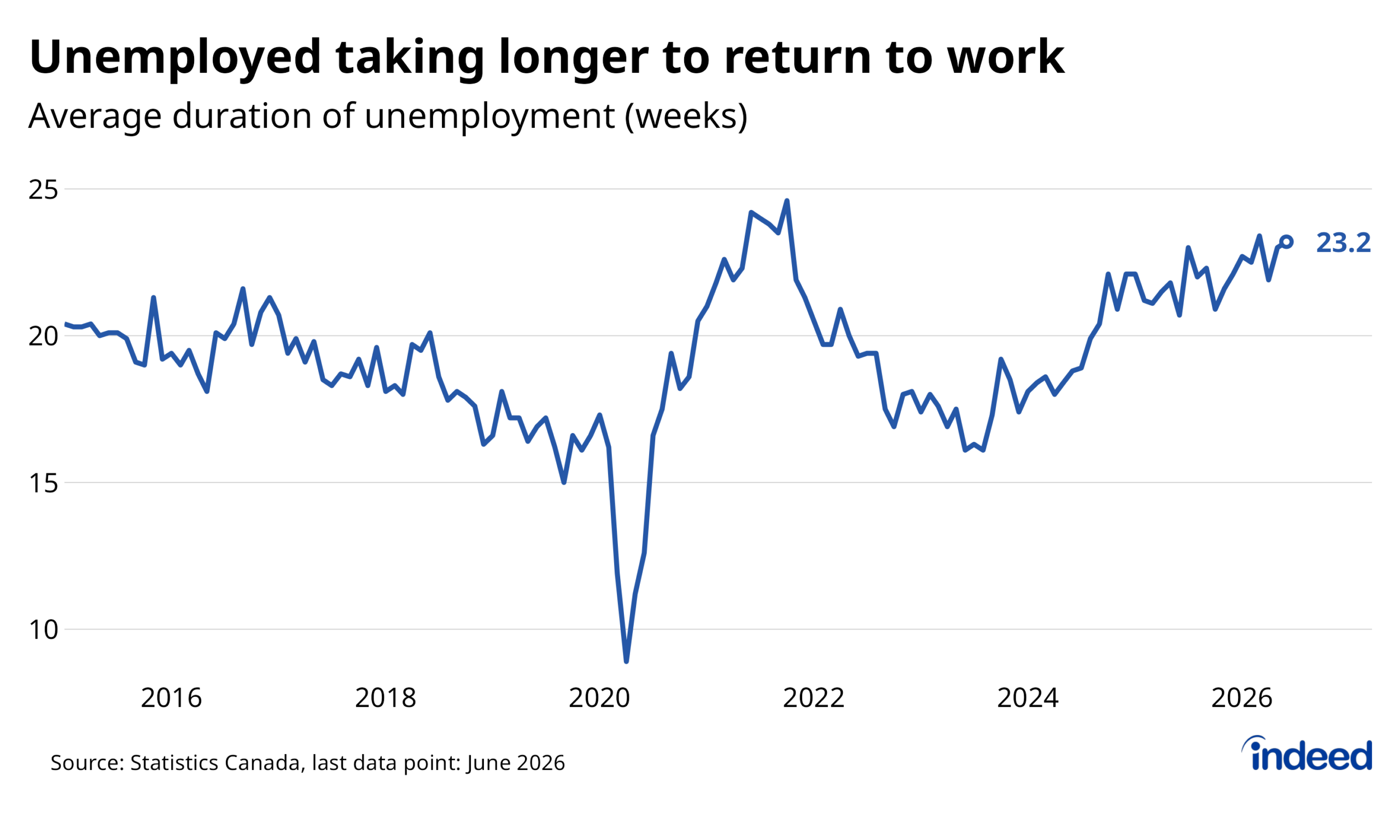
While the recent string of overall momentum is welcome, it will take many more months of progress for conditions to return to job seekers’ favour. One sign that the situation has turned would be a decline in the average duration of unemployment. However, the 23.2 average weeks in June was close to the highest we’ve seen during the current cycle. Instead, the stable – but static – Canadian labour market continues.