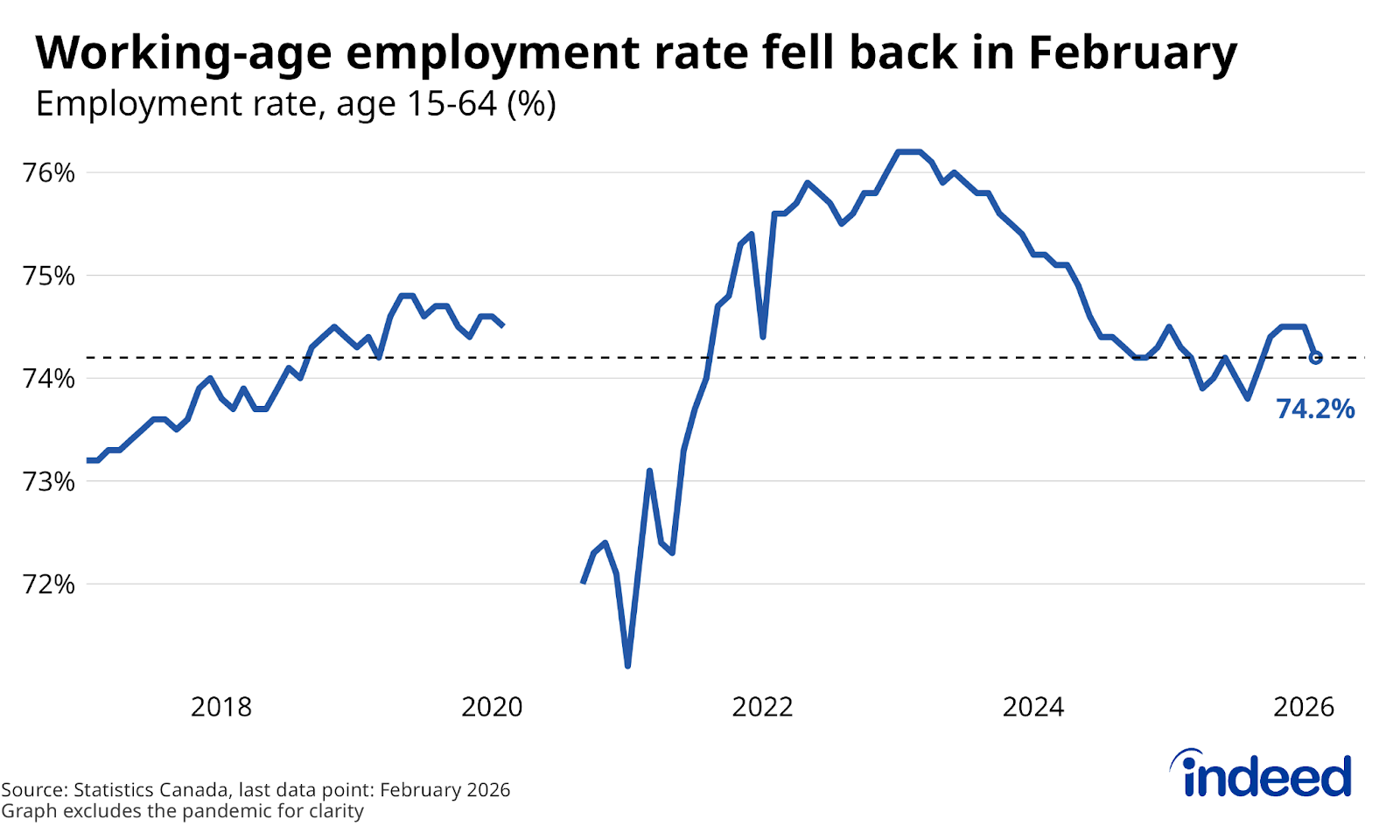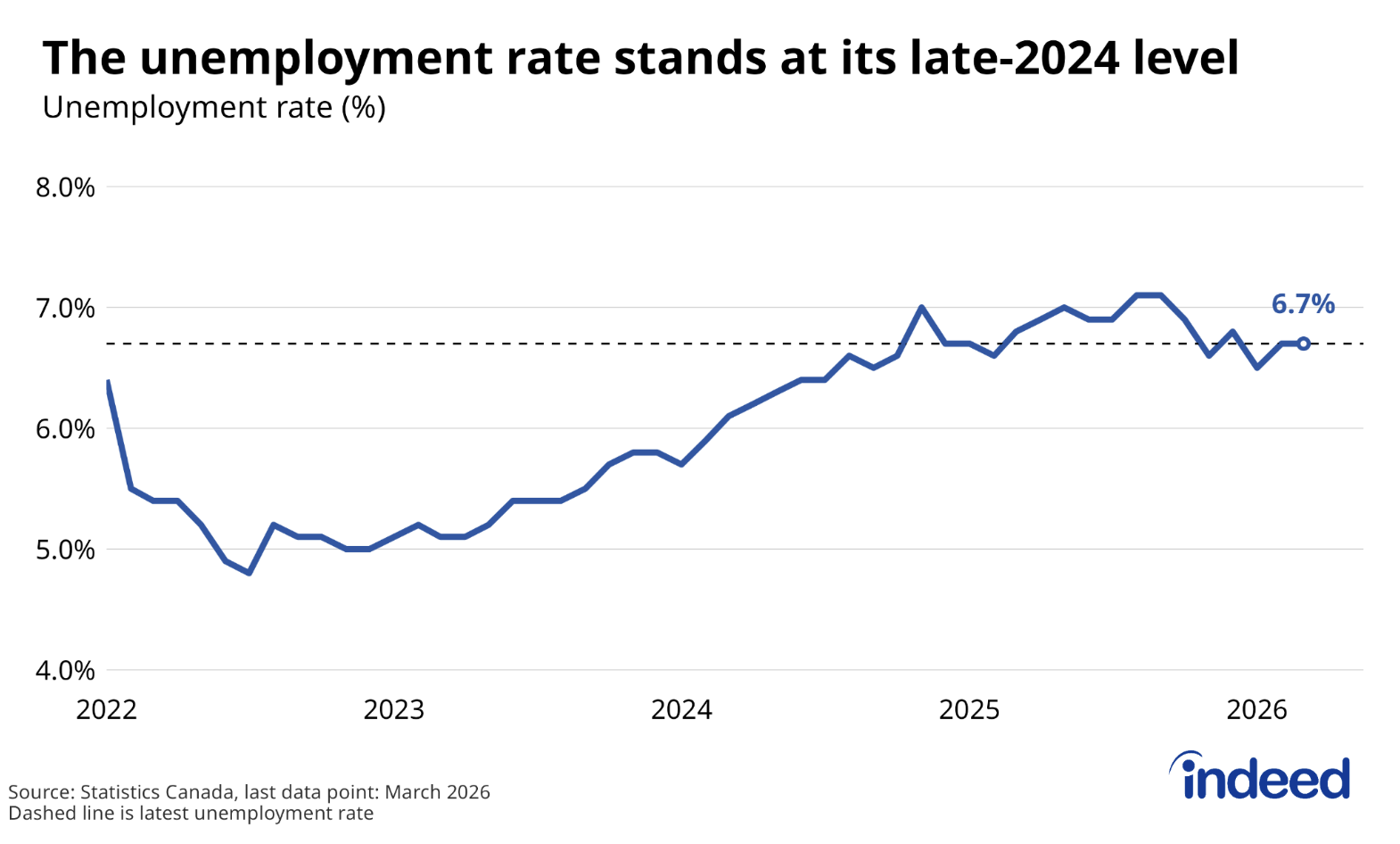
Canadian employment held steady in March, easing some of the volatility that led up to February’s eye-popping drop. Other key data was also largely stable, including hours worked, the unemployment rate, and the part-time/full-time split. This leaves the market at a point where, despite all the economic events over the past year and a half, the prevailing unemployment rate (6.7% in March) remains at essentially the same level it was at late-2024.
In previous periods, March’s net-employment growth of 15,000 would be fairly underwhelming. However, now that Canada is on the other side of its post-pandemic immigration boom, flat readings are likely to be the norm in the near-term. The size of the adult population has plateaued, and excluding Canadians over 65, is now in slight decline. This will slow the trend in employment growth. However, from a job seeker’s perspective, it also means that overall job gains don’t need to be elevated for measures like the unemployment rate to remain flat.
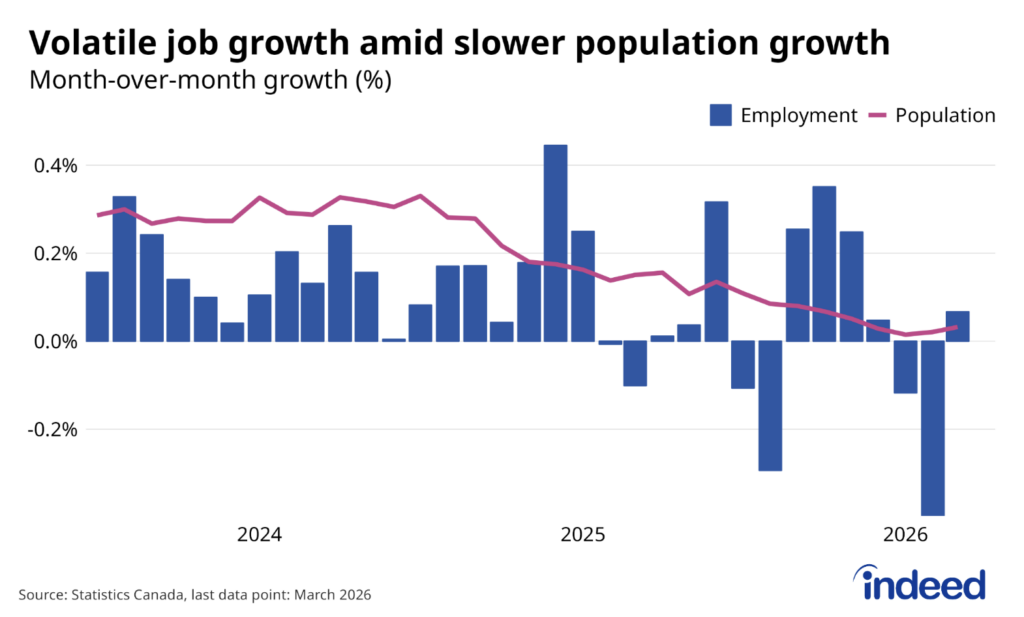
Over the past few years, the Canadian labour market has been stable for some, static for others. Workers in full-time, career-track jobs have benefited from low layoffs, and wage growth has remained robust. However, conditions remain difficult for job seekers across a wide range of circumstances. The March job numbers suggest this dynamic is lingering, while economic forecasts suggest the situation will likely continue as the year proceeds.