Key points:
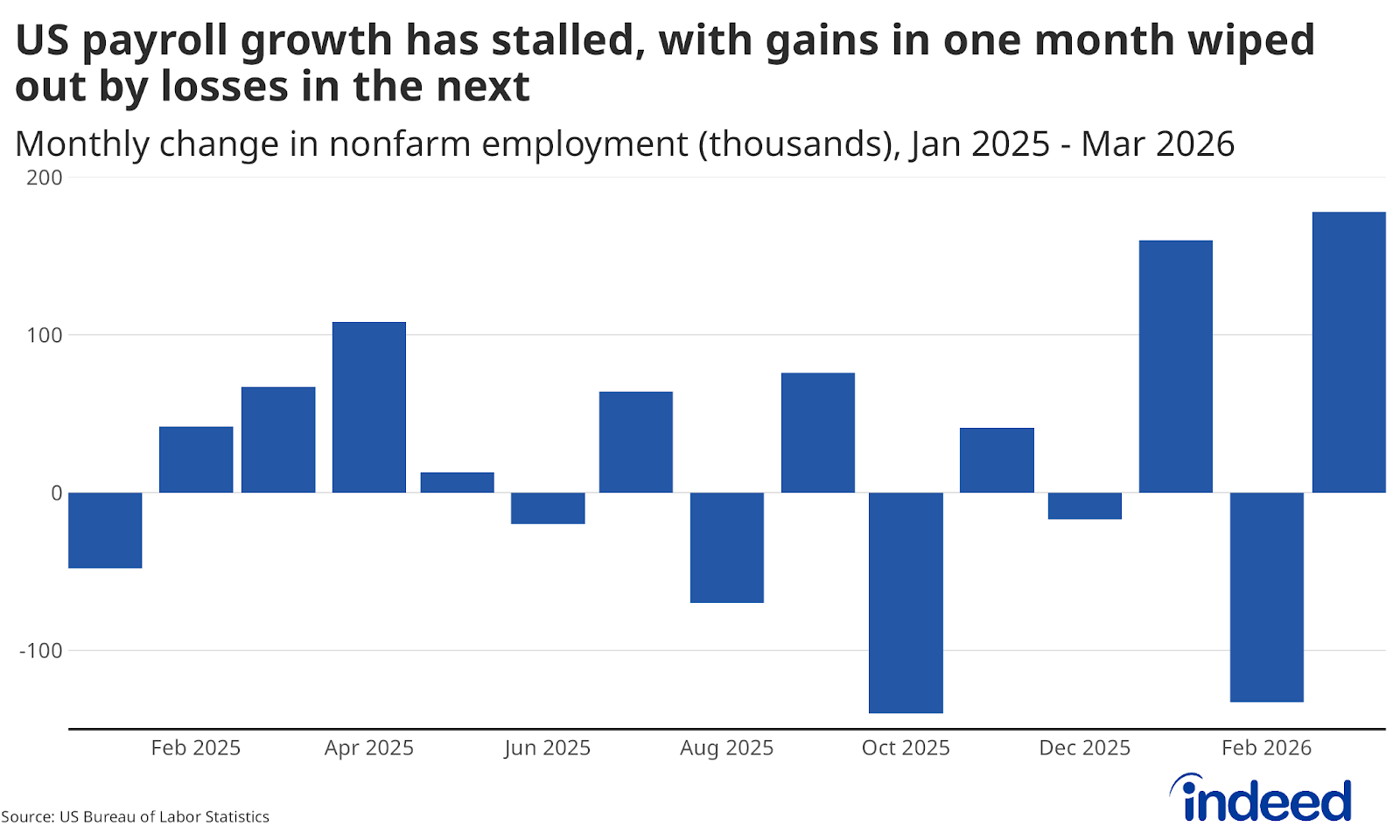
- Nonfarm employers added a surprising 178,000 jobs in March and the unemployment rate declined to 4.3 percent, according to the US Bureau of Labor Statistics.
- Even with today’s positive report, net job creation has been minimal for more than a year, continuing the now-entrenched low-hire/low-fire dynamic.
- The monthly break-even rate has undoubtedly fallen and may be near zero, meaning 178,000 new jobs added may be much more positive than we once thought.
- Other labor market signals, including long-term unemployment and labor force participation rates, continued to deteriorate.
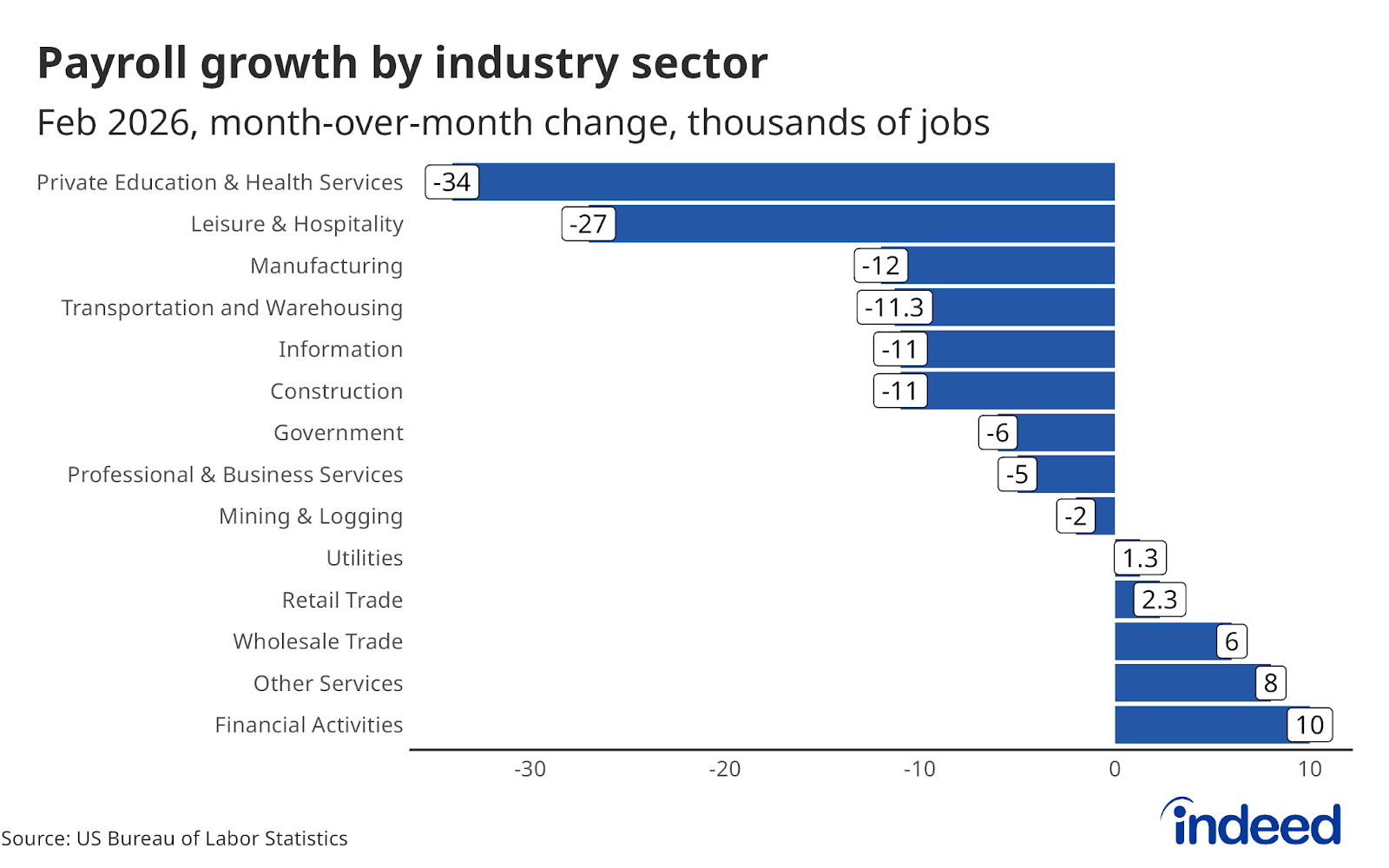
Employers added 178,000 jobs last month, nearly three times the consensus forecast of around 60,000, and the unemployment rate fell to 4.3%, a seemingly welcome plot twist after months of downbeat reports. But before anyone declares a long-awaited labor market revival, a few caveats are in order. Job gains in the healthcare and social assistance sector again did much of the heavy lifting, continuing a pattern of concentrated growth that has propped up the headline numbers for well over a year now. But the sector can only carry so much weight for so long, and long-term unemployment continues to rise as sidelined workers struggle to transition into the few sectors that are growing. The broader story of 2026 so far remains one of recalibration rather than acceleration. Slowing population growth, a steep drop in immigration and declining labor force participation mean the economy simply doesn’t need to produce the job gains of prior cycles to keep unemployment stable. Monthly gains of 178,000 look impressive today, even as a month of 50,000 or fewer may also be perfectly adequate tomorrow.
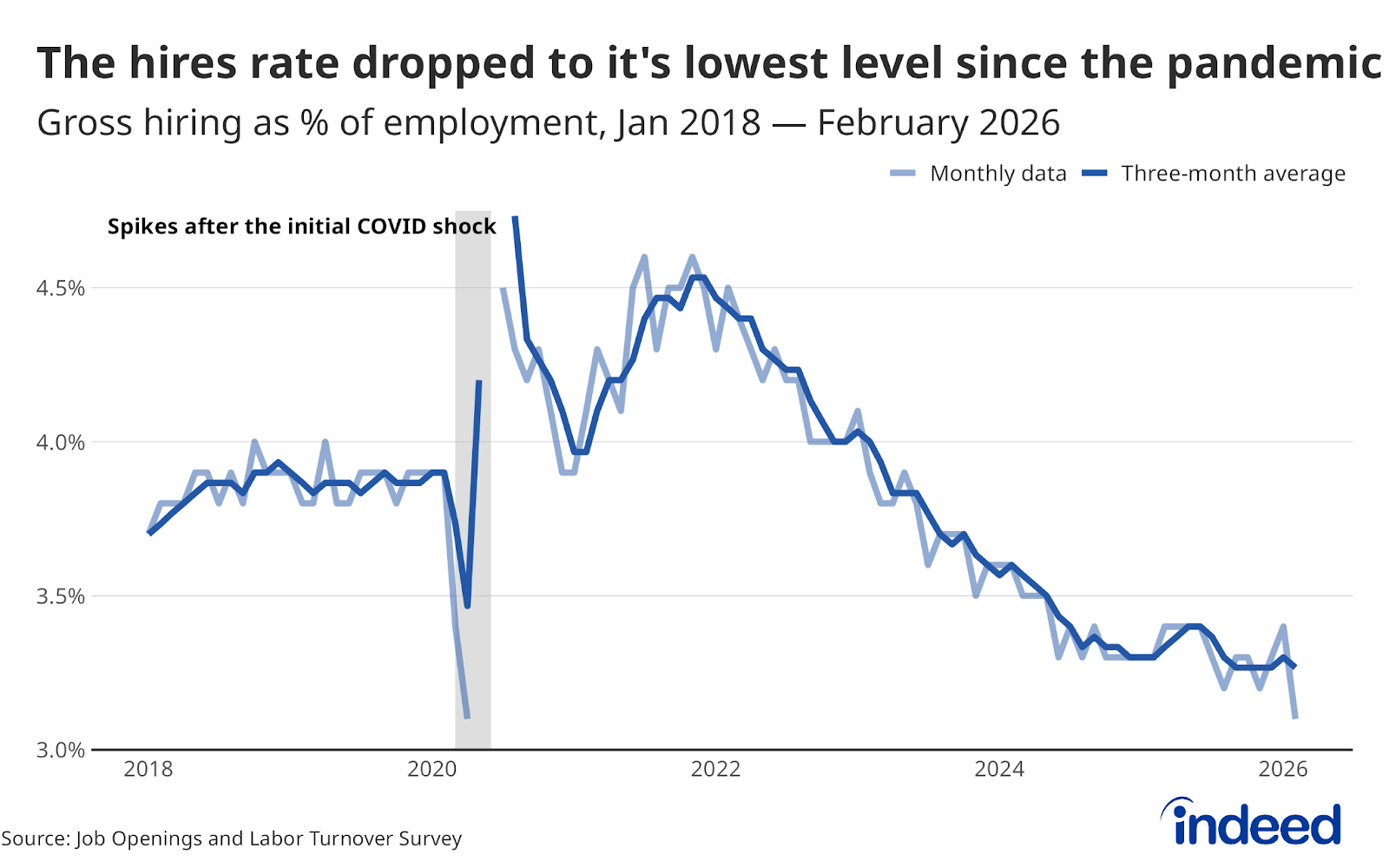
For many months now, the rhythm of the labor market (outside of healthcare and social assistance) hasn’t been about job losses or gains. It’s been about stillness. Employers are neither hiring aggressively nor making meaningful cuts. The hires rate has been hovering near historic lows, while layoffs remain low. At the same time, the quits rate is also incredibly low. Workers are staying in their jobs, not necessarily because it’s a perfect fit, but because the opportunity to potentially find something better has dried up. The result is a labor market that has essentially adopted a defensive posture, and March’s numbers, while stronger than expected, don’t suggest that posture is changing.
For most of the past decade, the rule of thumb was that the economy needed to add somewhere between 100,000 and 150,000 jobs per month to keep the unemployment rate from rising. That benchmark, often referred to as the break-even rate, has now dramatically downshifted in response to the demographic and immigration realities of 2026. New research from the Dallas Fed makes a compelling case that the break-even rate is astonishingly close to zero, and may even now be negative.
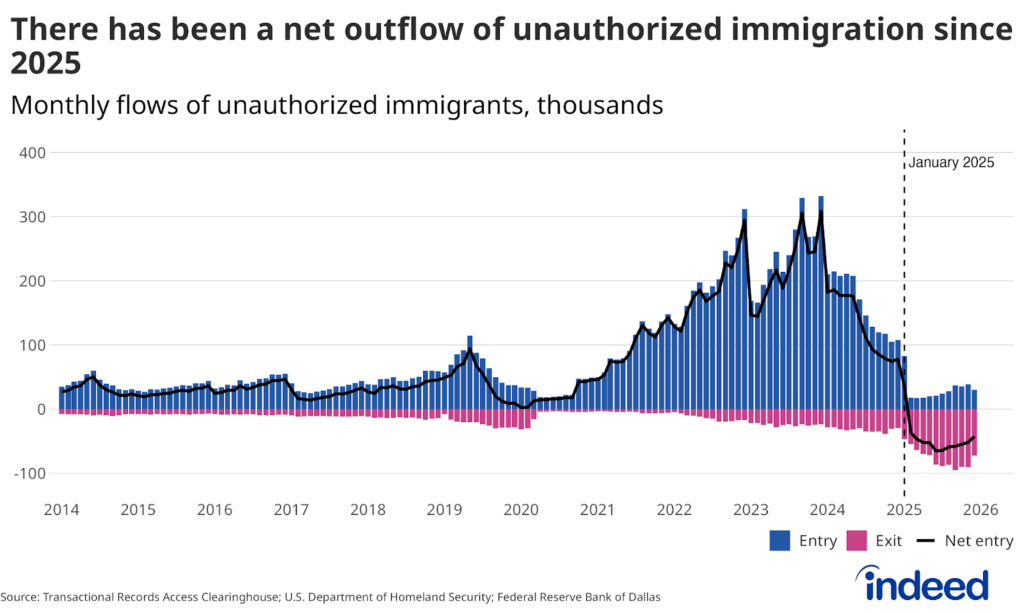
The US labor force experienced a shock in 2025 driven by a sharp decline in immigration. Net unauthorized immigration turned negative in February 2025 and averaged around -55,000 per month in the second half of last year, with deportations and voluntary departures exceeding new arrivals by a wide margin. Incorporating these population shifts, the Dallas Fed estimates the break-even rate fell to near zero by mid-2025 and averaged slightly negative from August through December of 2025. Current data make it highly likely that this has continued into 2026.
One real sign of this shift is an unemployment rate that has remained at levels long considered very healthy, even as the vibe in the overall market has been far more volatile. In the past year, we have added 260,000 jobs in total nonfarm employment, an average of just 22,000 a month. In a world of break-even rates above 100,000, this would almost certainly lead to a sizable increase in the unemployment rate. Instead, the unemployment rate has barely budged, rising from 4.2% to 4.3%.
It’s always important not to read too much into a single report, and that might even be more true now in a world where economic uncertainty persists, and monthly jobs reports swing wildly back and forth from month to month. A gain of 178,000 jobs is a strong number, and certainly good news in general, but given the patterns we’re seeing, it doesn’t tell us much about what we may see going forward.