
Key Points:
- Irish job postings are well down from peaks, but remain 7% above pre-pandemic levels and have been fairly stable since May.
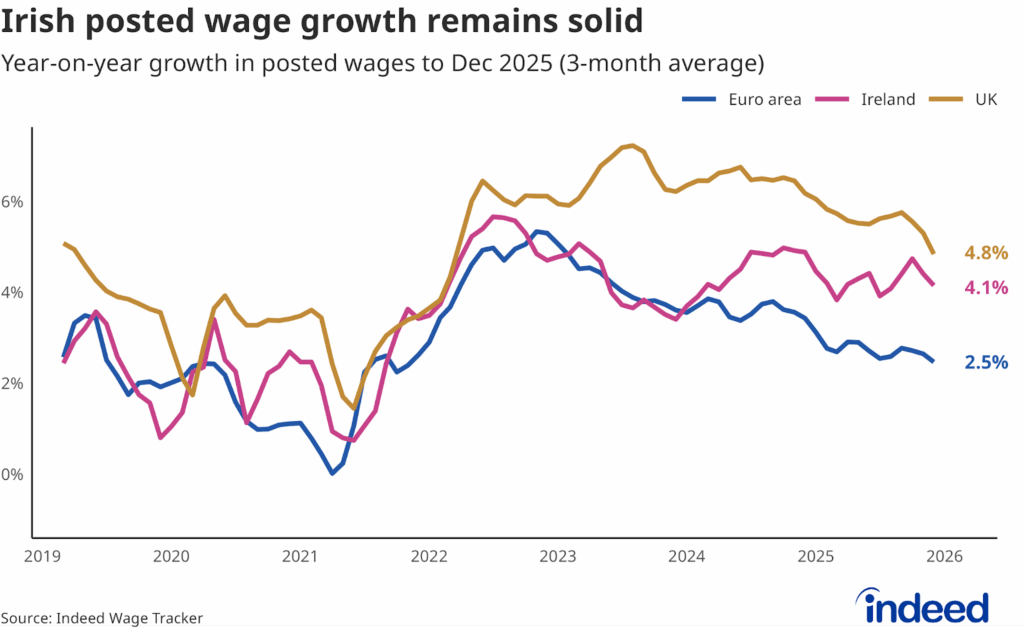
- Posted wage growth remains solid, running at 4.1% year-on-year.
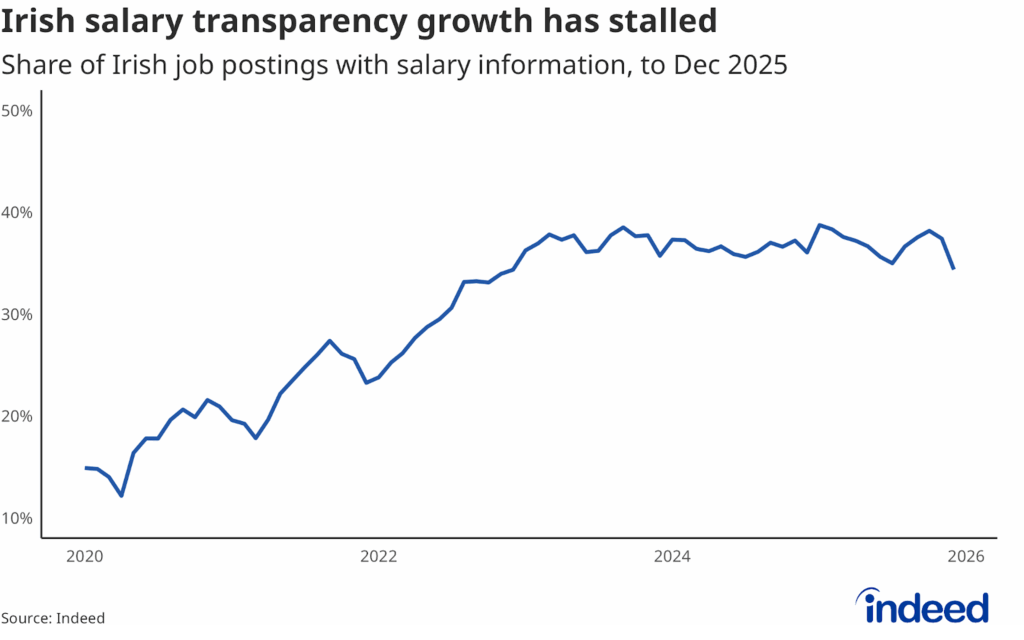
- Progress on salary transparency has stalled, but incoming EU legislation is set to change that.
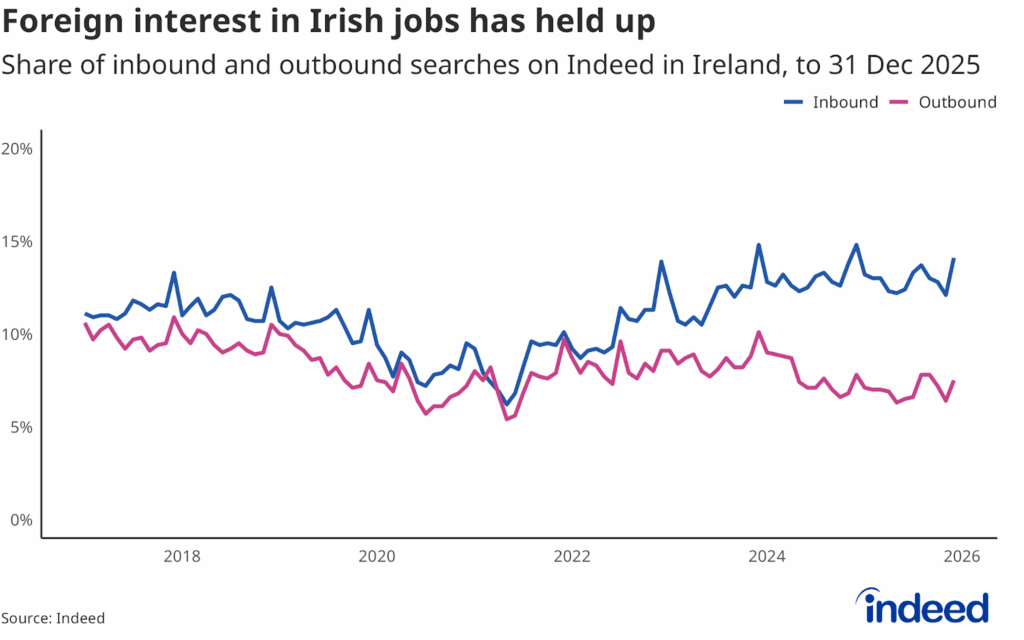
- Foreign interest in Irish jobs remains elevated, offering a potential route to easing skills shortages.
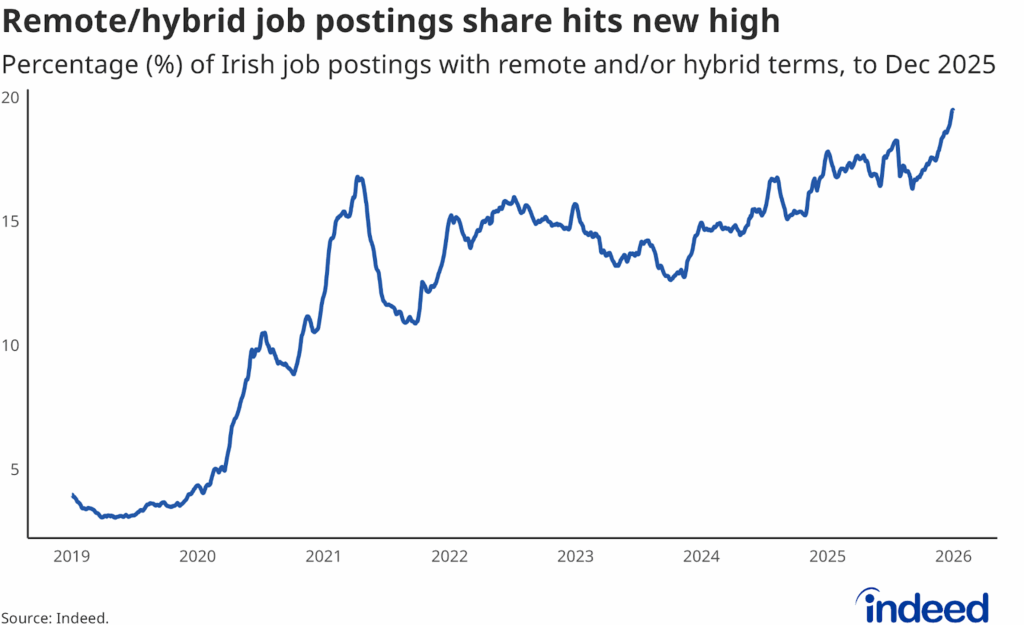
- Flexible working models remain widespread, with the share of remote or hybrid job postings climbing to new highs.
- Mentions of AI in job postings continue to surge.
The Irish economy enters 2026 on solid foundations. Central bank projections point to a healthy 3% expansion of the domestic economy this year. While this would be lower growth than the estimated 3.9% increase in 2025, the slowdown largely reflects the distorting impact of a surge in intangibles investment by multinational firms last year.
Monetary and fiscal policy are likely to remain tailwinds to growth. With the euro area economy proving resilient to tariff-related disruption in 2025 and inflation remaining subdued, the European Central Bank gradually lowered its key deposit rate last year to 2%. Investors expect interest rates to remain low for the foreseeable future. Combined with the Irish government’s expansionary fiscal stance, this should continue to provide supportive conditions for economic activity.
Continued solid growth should provide firm underpinnings for the Irish labour market, which is expected to remain relatively tight despite job postings having largely normalised from post-pandemic highs. Ireland continues to benefit from high levels of labour market participation and an expanding workforce driven by inward migration. Figures up to Q3 of this year show an annual increase in the number of people in employment of 30,600 to a total of 2,825,500.
Job losses have remained limited and unemployment is projected to stay close to its current level of 5% in 2026 — slightly higher than at the start of 2025, but still low by historical standards. As a result, hiring challenges are likely to persist in some sectors.
The tight labour market is likely to sustain further solid wage growth, meaning employers will still be competing in a market where candidates expect meaningful pay increases. Competitive pay offers, alongside non-wage benefits including flexibility and progression, remain important tools for attracting and securing talent. Salary transparency is another part of this and is set to be dramatically boosted by incoming legislation in 2026.
Immigration is therefore likely to remain an important channel for meeting labour demand. At the same time, rising AI adoption is shaping workforce strategies, as firms redesign and rebalance certain business functions.
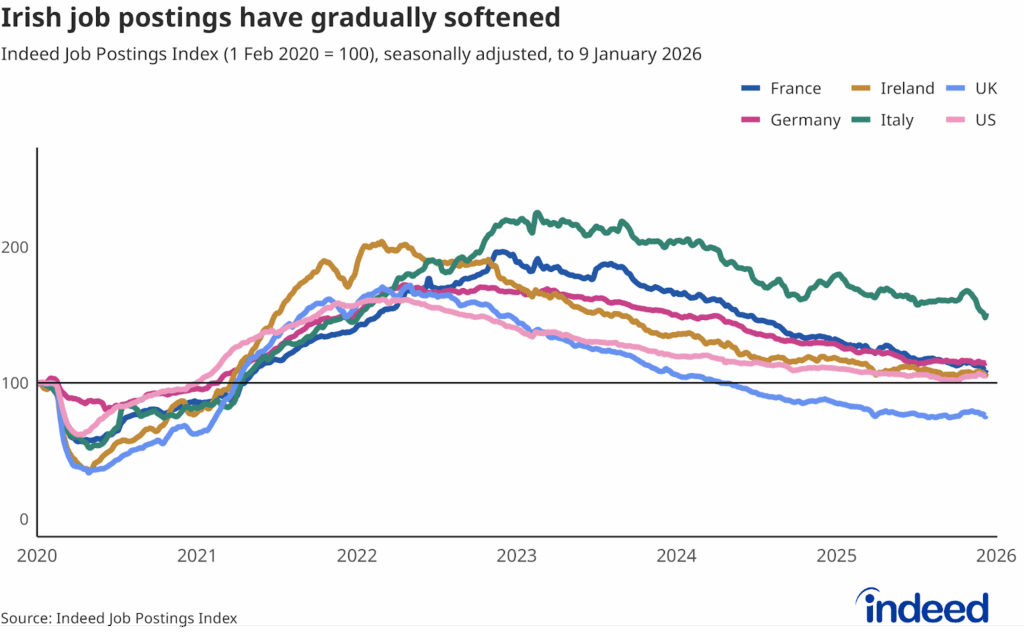
Irish job postings have stabilised
Job postings in Ireland are well down from the peaks seen in early 2022, but still remain 7% above their pre-pandemic baseline as of 9 January 2026. The level of postings has remained relatively stable since May.
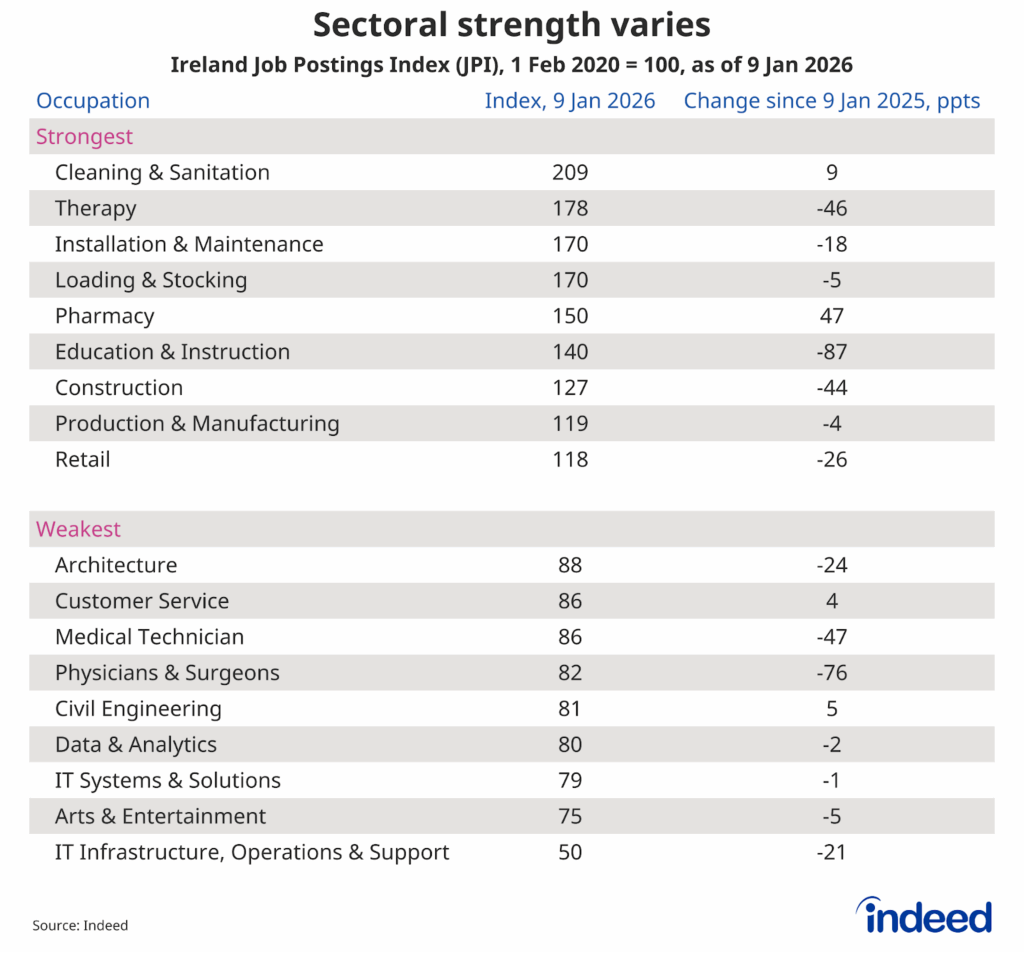
There continues to be considerable variation in the strength of job postings across different occupational categories. Postings are most elevated compared with pre-pandemic levels in cleaning & sanitation, having gained momentum over the past year. Conversely, IT infrastructure, operations & support postings are furthest below baseline.
With infrastructure and housing being priority areas for policymakers, construction and related sectors such as installation & maintenance may continue to be among the stronger performers in 2026.
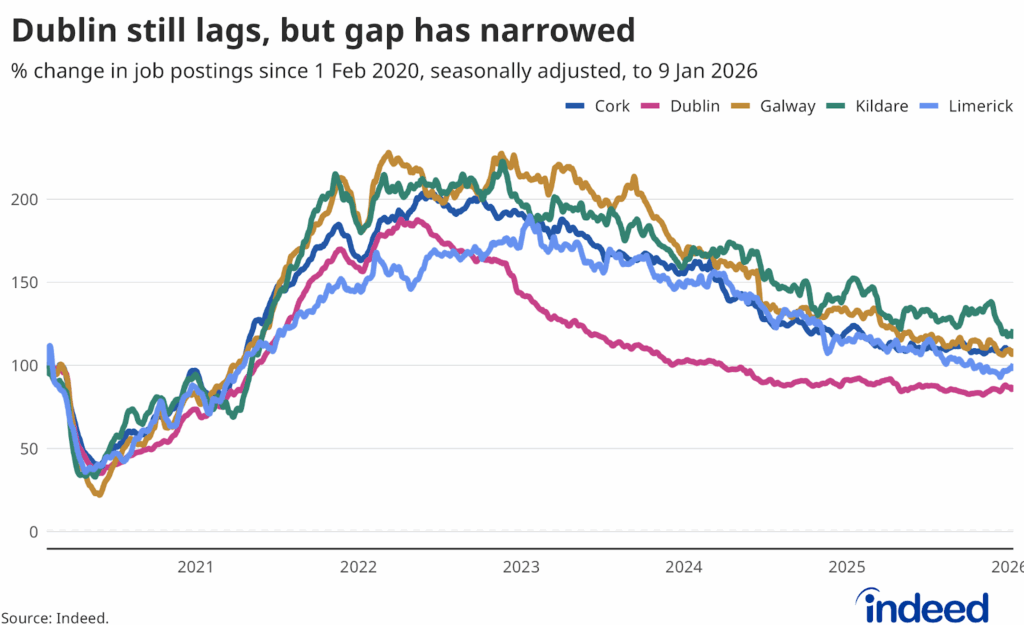
Dublin job postings continue to lag, but the gap has narrowed amid cooling elsewhere
County Dublin has seen more subdued job postings than Ireland’s other large counties in recent years, reflecting its heavier concentration in tech and professional roles, which have seen some of the sharpest declines from pre-pandemic levels.
As of 9 January, total postings in Dublin were around 12% below their pre-pandemic baseline. Having said that, levels have been broadly stable over the past year and a half. In fact, Dublin ended last year on the upswing, recording 4% month-on-month growth.
Conversely, job postings have continued to gradually fall from peaks in Cork, Galway, Kildare and Limerick, though all four remain above pre-pandemic levels (albeit only marginally in the last case). A continuation of current trends could see Dublin overtake one or more of these during 2026.
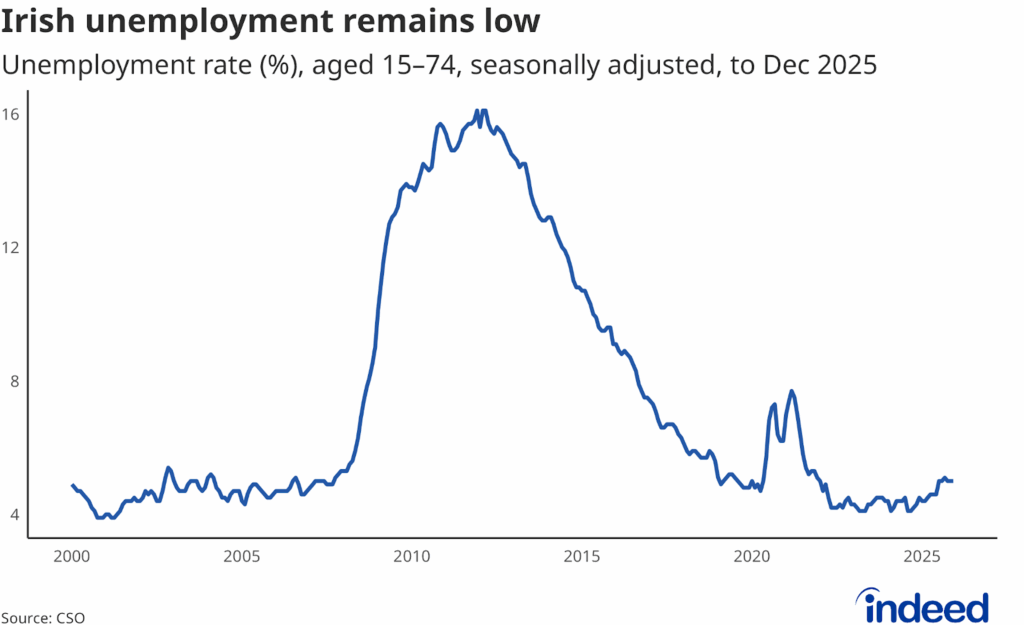
Unemployment rose a little in 2025, but is projected to remain stable this year
The headline unemployment rate edged up in 2025 but remains low by historical standards. After starting the year at 4.5%, the rate rose over the summer, reaching 5.1% in September before stabilising and ending the year at 5%. Attention now turns to whether unemployment settles around this level or continues to drift higher in the months ahead. If the domestic economy performs as expected, that should help keep unemployment contained; the Irish central bank projects the rate to remain close to current levels through the end of 2026.
Despite job vacancies having fallen from their highs, the labour market remains tighter than it was pre-pandemic, indicating a relatively limited pool of readily available jobseekers per opening. The ratio of vacancies to unemployed people was 0.21 in Q3 2025, compared with 0.15 in Q3 2019.
One area of concern has been rising youth unemployment. The unemployment rate for those aged 15-24 years was 14.0% in December, the highest level since mid-2021.
Periods of cooling in the labour market typically tend to impact the prospects of younger people, as slower hiring means fewer opportunities to get their foot on the ladder. The extent to which hiring demand continues to slow — or picks up — is likely to influence the trajectory of youth unemployment in 2026.
Posted wage growth remains solid
Tight labour-market conditions continue to translate into strong pay pressures in Ireland. At 4.1% in December (on a three-month average basis), wage growth as measured by the Indeed Wage Tracker remains well above the euro area average (2.5%).
Official data paints a similar picture. Average weekly earnings across the wider Irish workforce rose by 4.9% year-on-year in Q3 2025. The annual pace of inflation has edged up in recent months, reaching 3.2% in November, but pay growth remains positive in real terms.
This means employers remain in a competitive hiring environment where meaningful pay increases are still the norm. In 2026, like today, it’s likely that roles that are priced conservatively will risk slower fills and/or weaker candidate pipelines.
Salary transparency growth has stalled, but that’s set to change with incoming legislation
The share of Irish job postings that include wage or salary information has dipped recently to around 34%, its lowest since late 2022. But that’s set to change in 2026 with incoming EU legislation. The Irish government reportedly intends to go further in implementing the directive than is likely in certain other member states, requiring disclosure of pay ranges at the job-advertisement stage, in addition to other reporting requirements.
Preparing for these major changes will need to be a priority for HR teams over the next few months. But increased transparency itself may help facilitate faster, more reliable matches between job seekers and hiring managers by helping weed out potential applicants with salary needs or expectations that are different than those being offered. In a still-tight labour market, even slightly more-efficient and faster matches are likely to be welcomed by growing companies.
Benefit offerings have levelled off following growth in recent years
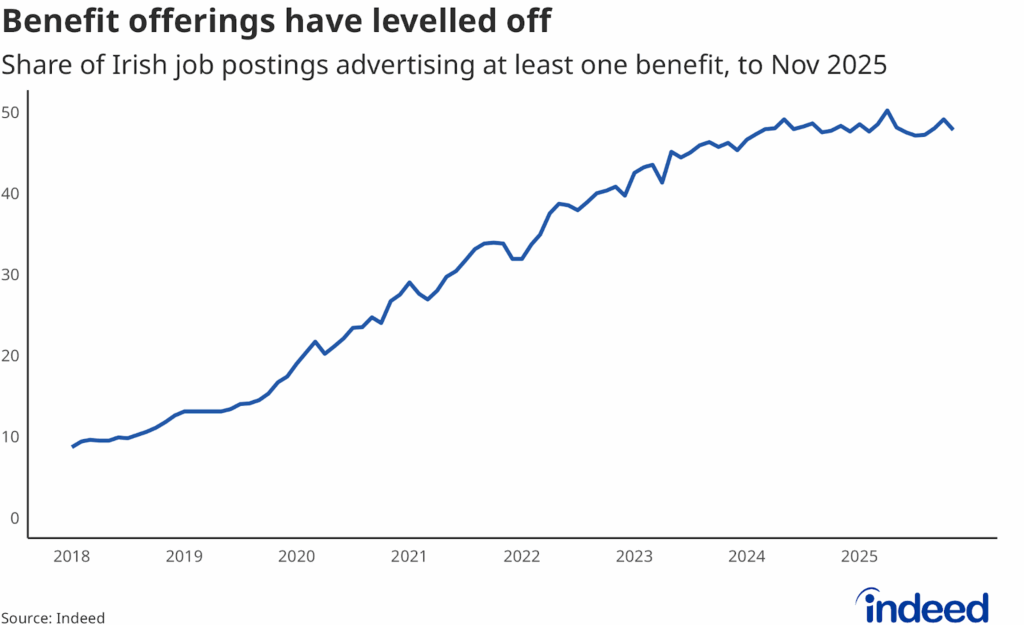
The share of Irish job postings mentioning at least one benefit has levelled off over the past 18 months, after rising steadily since 2018. Standing at 48% in November, the share was unchanged from its level in May 2024. The gradual cooling in hiring demand may have reduced the pressure on employers to continue expanding benefit offerings, resulting in a more stable pattern. That trend may persist in 2026, with the market now more balanced between employers and workers.
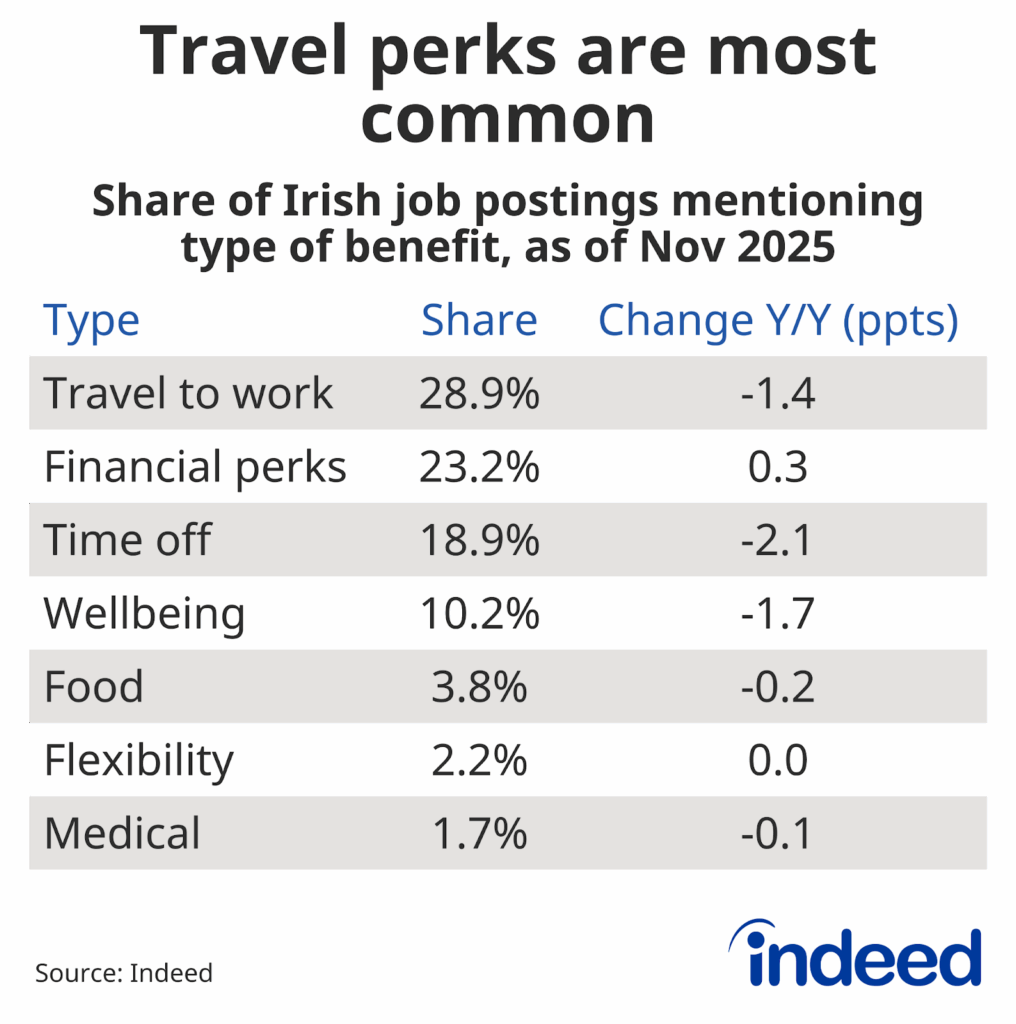
The most common types of benefits mentioned in Irish job postings are travel-to-work benefits (mentioned in 29% of postings), including travel subsidies, parking benefits and company cars. Financial benefits (23%) including stock plans, profit sharing and staff discounts are also common, as are time-off-related benefits (19%) including additional leave allowances and paid sick time.
Hybrid work persists
The share of Irish job postings mentioning remote or hybrid work is as high as ever, rising to 19.4% by the end of December — more than four times higher than pre-pandemic levels. Software development (47% of job postings are for remote/hybrid jobs), media & communications (44%) and data & analytics (43%) are among the occupations with the highest shares of remote or hybrid postings.
In a still-tight labour market, offering location flexibility remains an important tool for attracting a broad range of candidates. More than 2% of searches include terms specifically related to remote and hybrid work, close to post-pandemic highs, and it’s likely workers will continue to demand flexibility as long as the market remains tight.
Foreign interest in Irish jobs remains high
The Irish labour market remains attractive to foreign workers. On average in 2025, around 13% of searches for Irish jobs on Indeed originated outside Ireland. That was broadly in line with 2024 and higher than seen in recent years, since at least 2017.
By contrast, outbound searches from Ireland-based jobseekers exploring opportunities abroad averaged 7% in 2025, toward the lower end of the range seen in recent years.
Official figures show that net migration remained strongly positive at 59,700 in the year to April 2025, although this was down from a 17-year high of 79,300 in the previous year. Even so, migration continued to support robust population growth, with Ireland’s population rising by 78,300 (or almost 1.5%) to 5,458,600.
Higher immigration and a growing population can be positives for employers seeking access to a broad talent pool. At the same time, both intensify debates around the need for sustained investment in education, infrastructure and housing — both to accommodate a larger population and to preserve Ireland’s appeal to skilled, internationally mobile workers.
In 2025, the Irish government issued 31,044 employment permits — a 21% decline compared with 2024. With the economy operating close to full employment, recruitment from outside the European Economic Area continues to play an important role in addressing critical skills shortages.
More than a quarter (some 7,900+) of those permits were issued for roles in the health sector, including nurses and healthcare assistants. The information and communications technology sector accounted for over 3,600 permits, while agriculture received around 1,900. A further 3,500 permits were allocated to accommodation and food services.
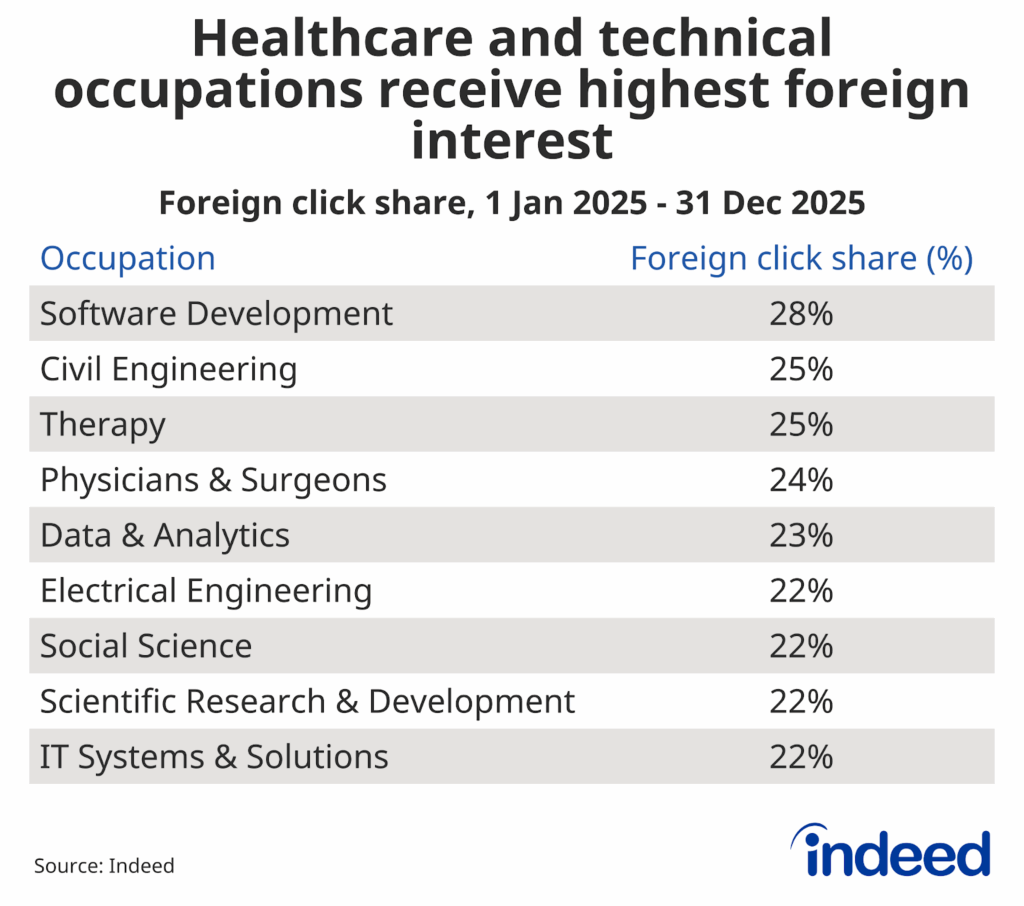
These same sectors also recorded the highest levels of foreign interest in 2025, with tech, healthcare and engineering attracting the largest shares of clicks from overseas jobseekers, underlining the close alignment between labour demand and international interest.
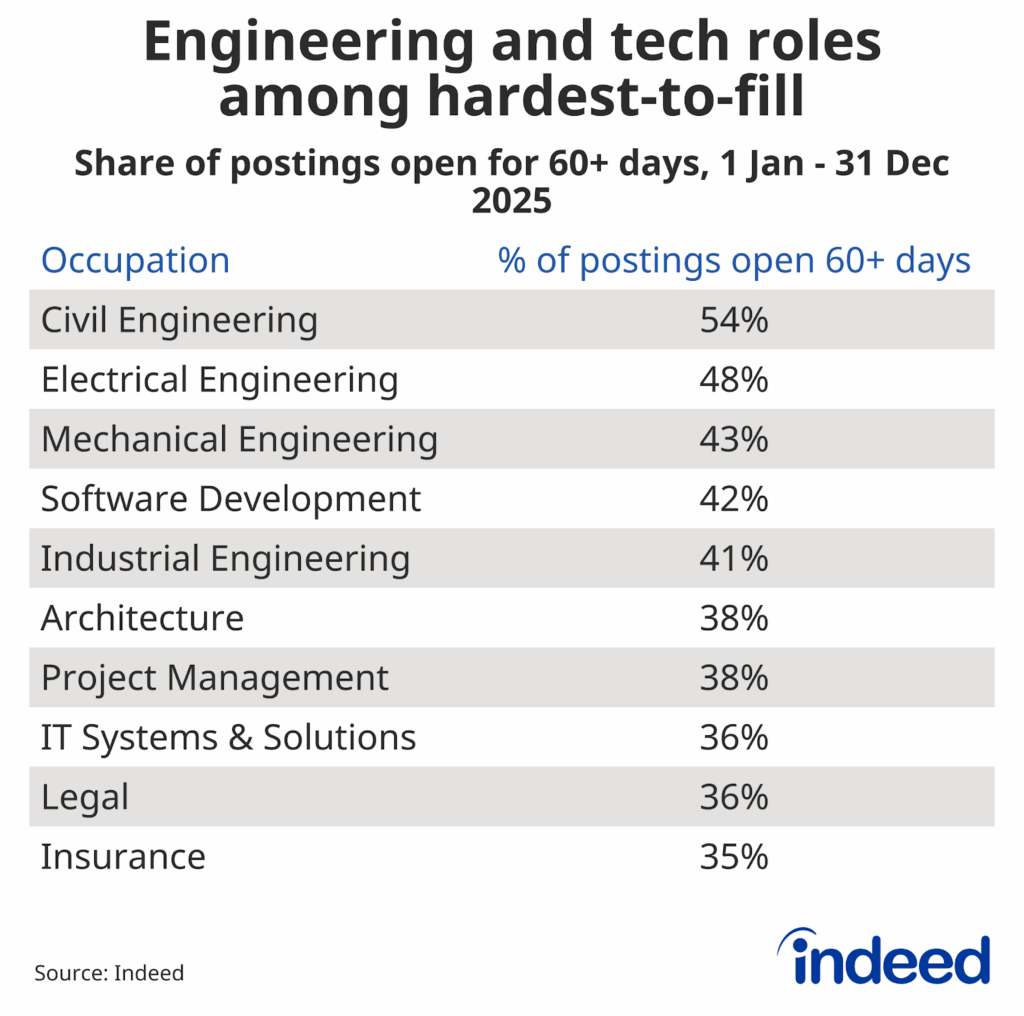
Tapping into foreign interest offers one route for employers seeking to fill hard-to-hire roles. Indeed job postings data shows that engineering and tech occupations remain among the most difficult to staff. As of end-December, the share of postings open for 60+ days was highest in civil engineering (54%), followed by electrical engineering (48%). These pockets of hiring difficulty are persistent, pointing to long-standing skills shortages rather than short-term frictions, and are likely to remain so in 2026.
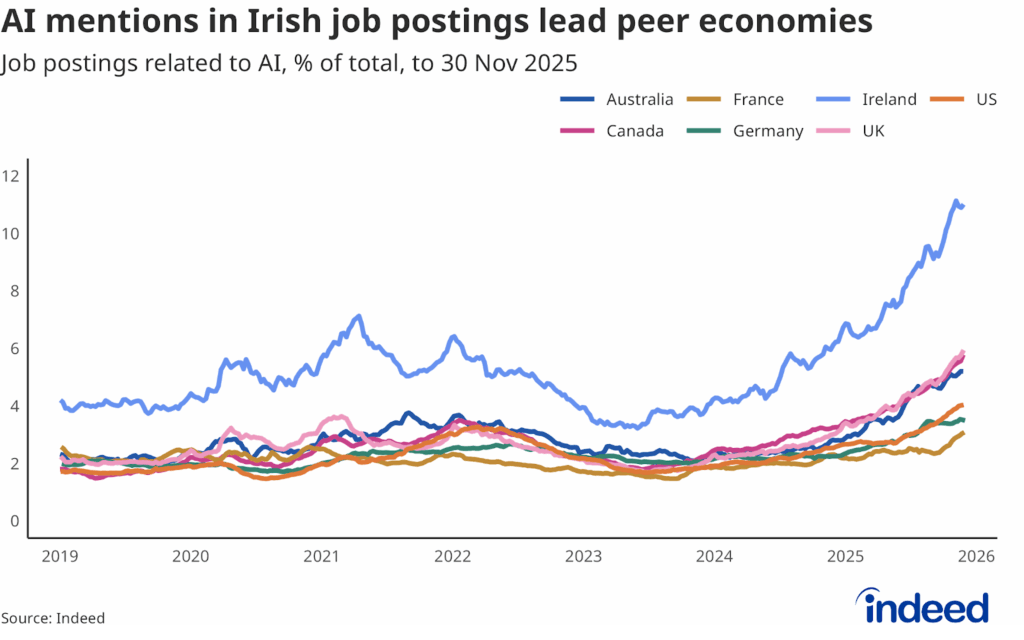
AI mentions in Irish job postings lead peer economies
Job postings that reference creating or using AI tools have risen sharply in recent months and continue to gain momentum. In Ireland, AI-related roles accounted for around 11% of all job postings as of end-November — high by international standards and reflective of the tech sector’s sizeable footprint in the Irish economy.
AI mentions are highest in tech categories
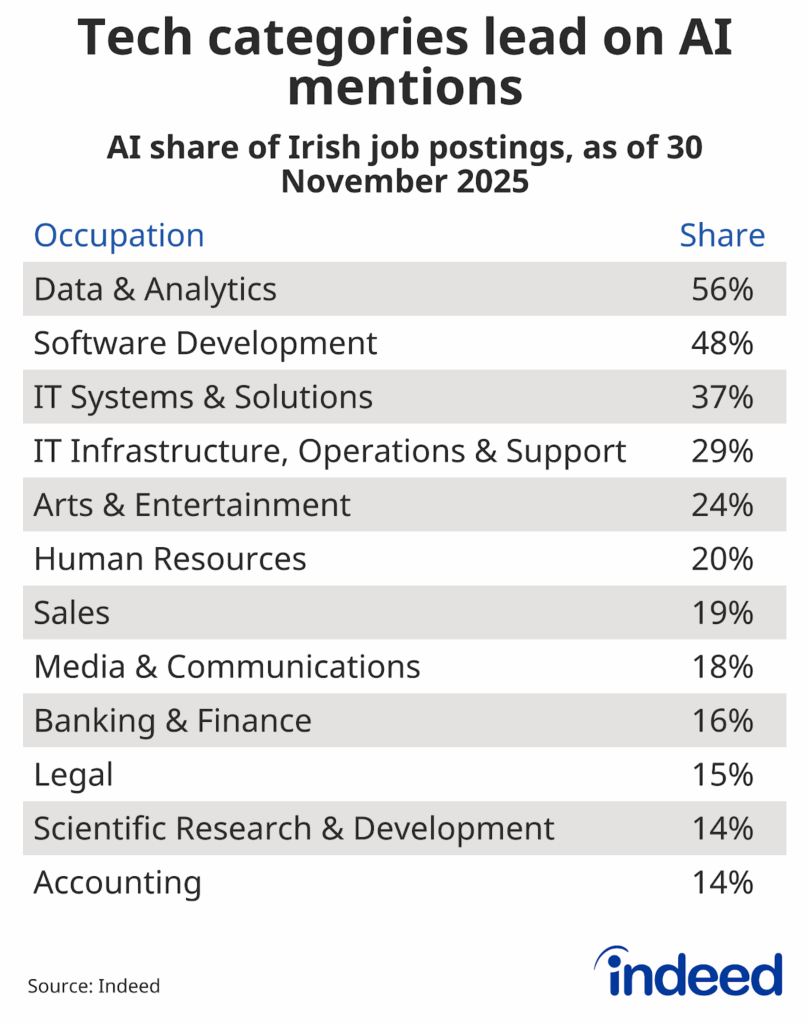
Job postings that mention AI are most frequently seen in tech-related categories, led by data & analytics (56%), followed by software development (48%), IT systems & solutions (37%) and IT infrastructure, operations & support (29%). However, several non-tech categories also have significant shares of AI postings, including arts & entertainment (24%), human resources (20%) and sales (19%). Our research indicates that the context of AI mentions in job postings varies considerably across occupational categories.
Irish workers rank among the most AI-engaged globally, according to Indeed’s survey data. Around 70% of employed people in Ireland reported using AI at least more than once per month in their jobs, well ahead of peers in other developed economies. Strong employer encouragement appears to be a key factor driving this relatively high adoption, while Ireland’s tech presence no doubt supports a concentration of firms at the AI vanguard.
Conclusion
The Irish labour market weathered the turbulence of 2025 and is set to remain on a solid footing in 2026. While job postings are well below their peaks, conditions remain competitive for talent. Jobseekers continue to retain a degree of leverage over pay and benefits, with wage growth remaining robust and hybrid working firmly embedded.
Skills shortages are therefore likely to persist in parts of the economy, with international candidates set to form part of the solution for many employers. At the same time, Ireland’s strong tech presence positions the country to be a leader in AI adoption, as both employers and workers continue to embrace the technology at pace.
Methodology
Data on seasonally adjusted Indeed job postings is an index of the number of seasonally adjusted job postings on a given day, using a seven-day trailing average. Feb. 1, 2020, is our pre-pandemic baseline, so the index is set to 100 on that day. We seasonally adjust each series based on historical patterns in 2017, 2018, and 2019. We adopted this methodology in January 2021.
To calculate the average rate of wage growth, we follow an approach similar to the Atlanta Fed US Wage Growth Tracker, but we track jobs, not individuals. We begin by calculating the median posted wage for each country, month, job title, region and salary type (hourly, monthly or annual). Within each country, we then calculate year-on-year wage growth for each job title-region-salary type combination, generating a monthly distribution. Our monthly measure of wage growth for the country is the median of that distribution.
The number of job postings on Indeed.com, whether related to paid or unpaid job solicitations, is not indicative of potential revenue or earnings of Indeed, which comprises a significant percentage of the HR Technology segment of its parent company, Recruit Holdings Co., Ltd. Job posting numbers are provided for information purposes only and should not be viewed as an indicator of performance of Indeed or Recruit. Please refer to the Recruit Holdings investor relations website and regulatory filings in Japan for more detailed information on revenue generation by Recruit’s HR Technology segment.