
Key points:
- Australian employment growth has slowed considerably, with gains this year tracking well behind last year.
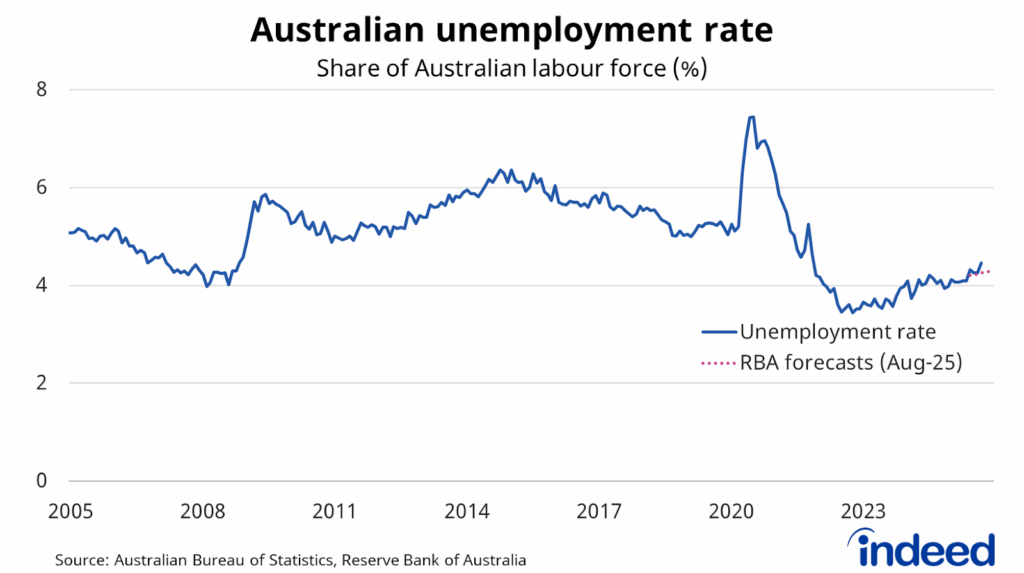
- Australia’s unemployment rate increased to 4.5% in September — its highest level since November 2021 — from 4.3% in August.
- The slowdown in employment growth may trigger another rate cut by the Reserve Bank of Australia in November.
Australian employment rose by 14,900 people in September, falling short of market expectations. The unemployment rate climbed to 4.5%.
Australian employment growth has slowed significantly this year. After adding another 14,900 people in September, employment has increased by just 116,000 people over the first nine months of the year. That compares to a gain of 323,000 people over the same period last year.
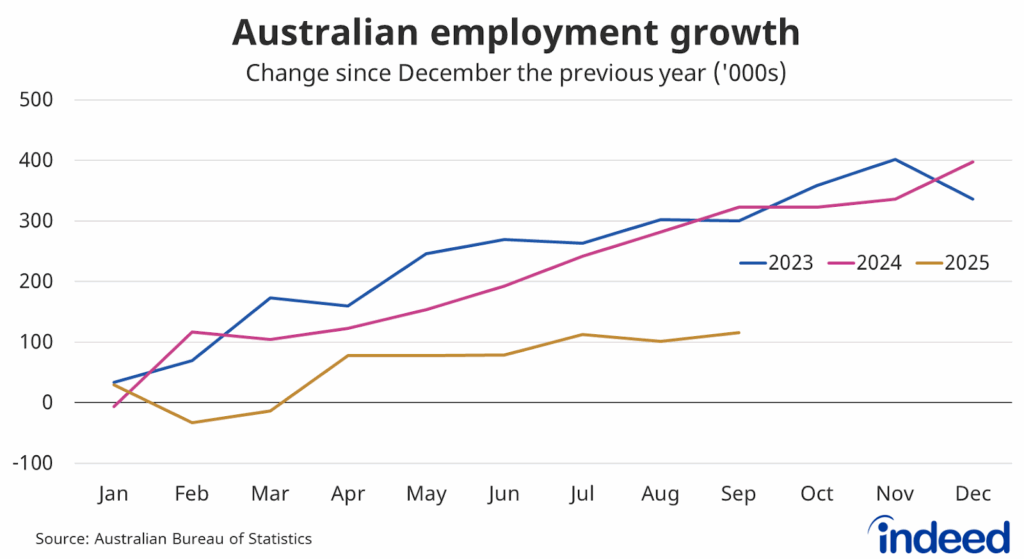
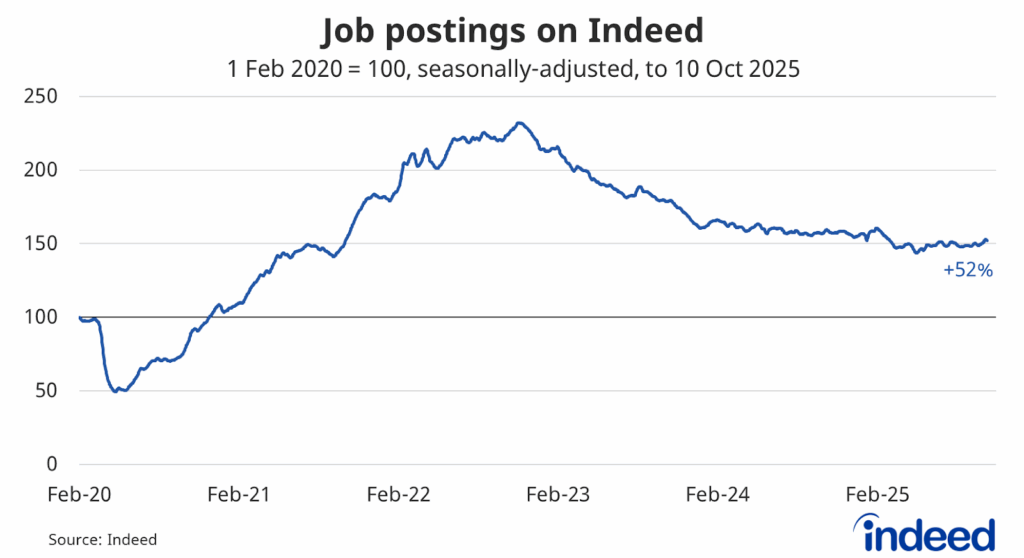
Maintaining the pace of employment growth from 2023 and 2024 was always going to be difficult. Still, the drop-off has been swift, and the magnitude somewhat unexpected, given the ongoing strength in measures (including Indeed’s Job Posting Index). Job vacancies are jobs waiting to be filled, so a high number of job postings typically indicates strong future employment growth. That hasn’t been the case in 2025 so far.
Australia’s unemployment rate continues to rise
In September, Australia’s unemployment rate rose to an almost four-year high of 4.5%. The reason for that is quite simple: Australian employment growth is no longer keeping pace with Australia’s working-age population growth. Until that changes, Australia’s unemployment rate will drift higher. This year, so far, our unemployment rate has increased by 0.5 percentage points.
Crucially, the unemployment rate is now well above the latest Reserve Bank of Australia forecasts. They expected the unemployment rate to reach 4.3% by year’s end, but that forecast will surely be revised up considerably when they publish their new forecasts in November.
Assessment and implications
With the job market slowing considerably, the RBA needs to cut rates to provide sufficient support to households and businesses to ensure that the unemployment rate remains low and we avoid recession. Three cuts this year have helped, but their job isn’t done yet.
Given that changes in monetary policy impact the economy with a significant lag, a rate cut won’t have an immediate impact on the job market. But it will provide crucial support next year and, hopefully, stop the unemployment rate from rising much further.